How long does purchase requisition approval take?
32seconds
the median time for Pactum's Digital Workers to check a request against all its policies.
Pactum platform data, Sep to Oct 2026.
TL;DR
If you only have 30 seconds, here's what you need to know:
- Reviewing and approving a purchase requisition (PR) takes two to five days in most organizations Pactum works with. Two companies Pactum talks to had a target of about two days for that review, while a good target for a routine request is a review measured in minutes and a purchase order within one to two days.
- Pactum's Digital Workers run every check a requisition needs in seconds and approve it themselves. They confirm the request is compliant, on the right buying route and with the right suppliers, and whether a single-source request should go to competition, in a median of 32 seconds in Pactum's platform data, so a requisition that passes every check can skip the buyer's manual review and needs fewer human approvals.
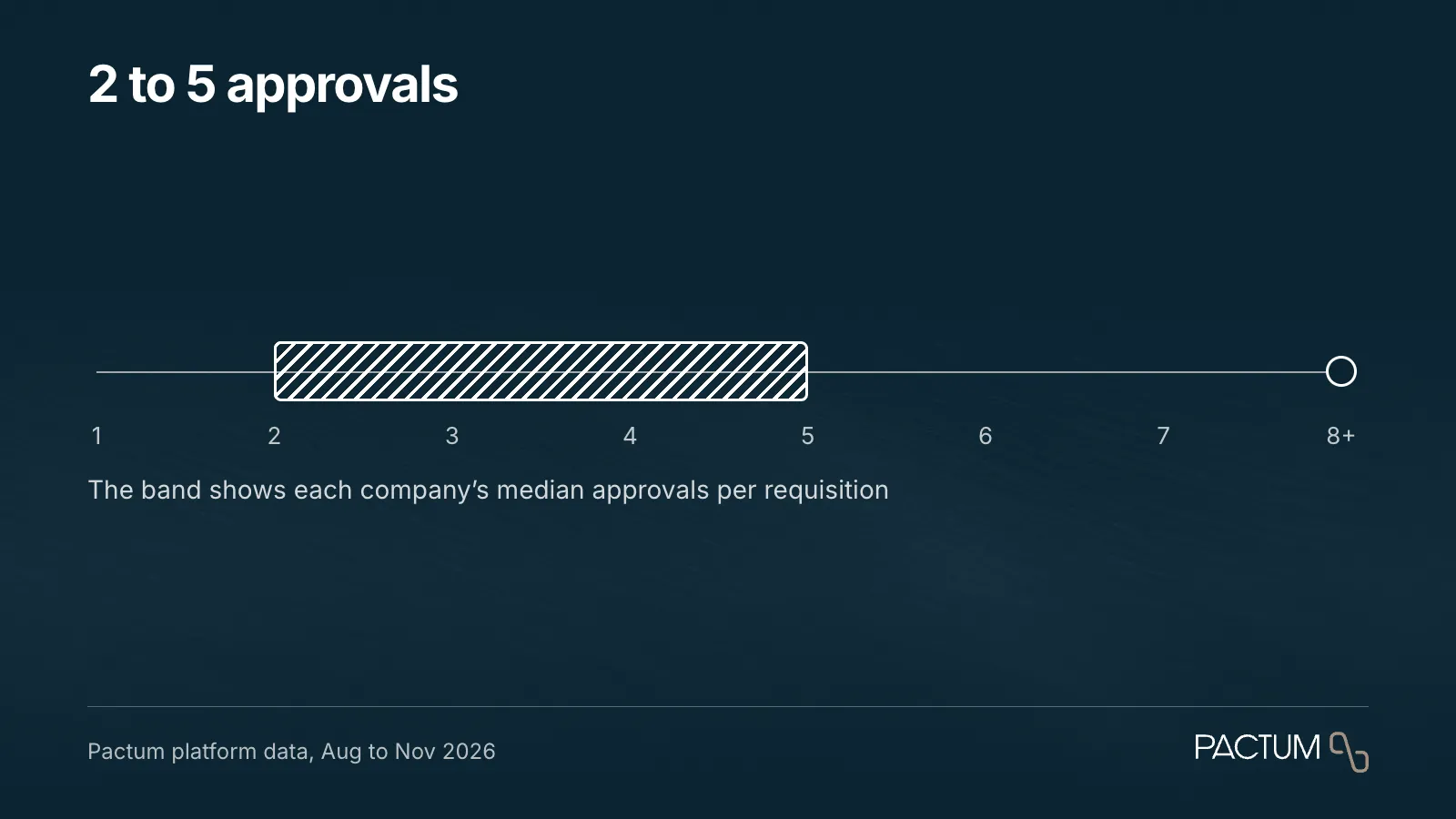
- A typical company's requisitions go through 2 to 5 approvals in Pactum's platform data. Fewer than 2 in 100 purchase requisitions need 8 or more approvals, and approvals that check different things should run in parallel, so one approver's wait doesn't add to another's.
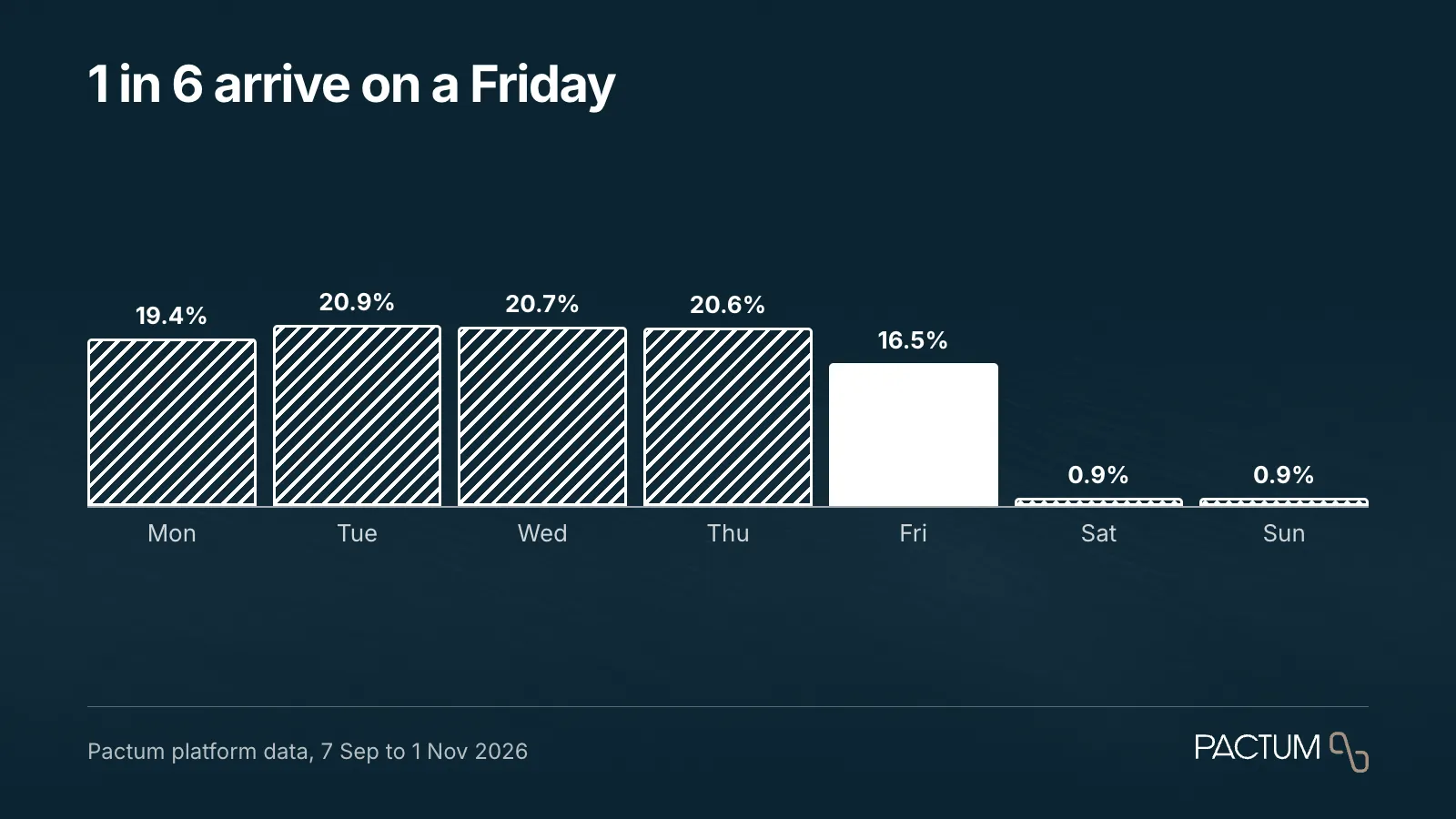
- Requisition time is best tracked in business days, with calendar days alongside. In Pactum's platform data, 1 in 6 purchase requests arrives on a Friday, and one that isn't picked up that day can stall over the weekend, which pushes back the purchase order and any sourcing or negotiation that depends on it.
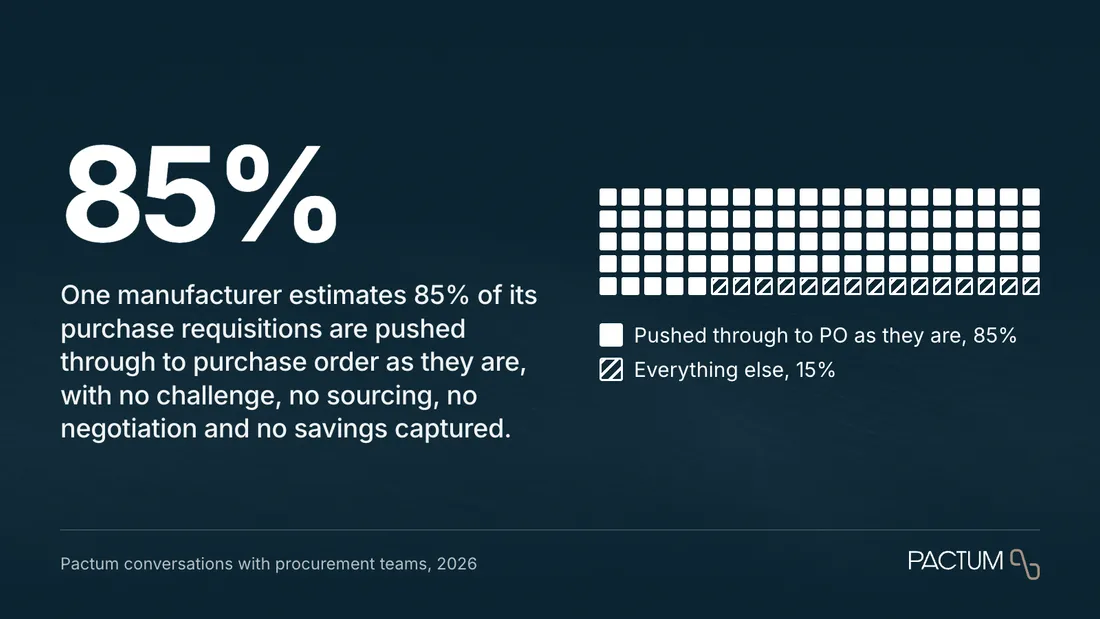
- The supplier and price on a requisition usually go onto the order unchanged, unless a buyer has time to go to market. Buy desks are busy clearing the next request, so sourcing and negotiation rarely happen inside the PR to PO cycle. One manufacturer estimates 85% of its purchase requisitions are pushed through to purchase order as they are, with no challenge, no sourcing, no negotiation and no savings captured.
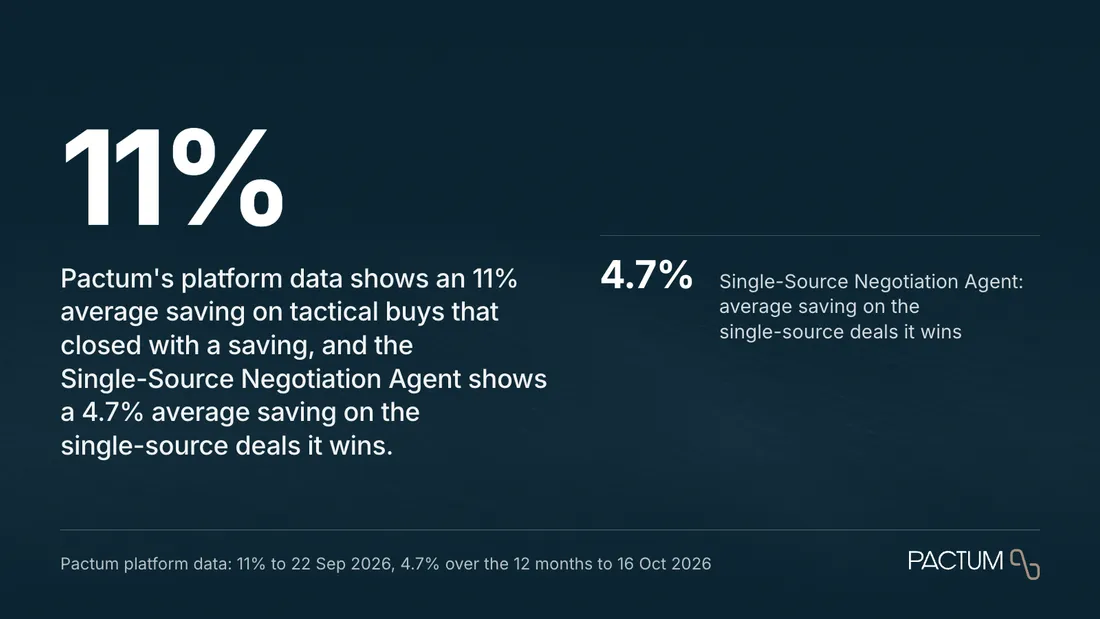
- Pactum's Digital Workers run the whole path from requisition through negotiation, across all of a company's spend. They run every requisition check, find the right buying route, and decide whether a request goes to competition or to a negotiation with the current supplier, with Coupa or SAP Ariba kept as the record. Pactum's platform data also shows an 11% average saving on tactical buys that closed with a saving.
Key numbers
What is a good purchase requisition approval time?
For a routine purchase requisition that passes every check, a good approval time is a review measured in minutes and a purchase order within one to two days. Across the enterprises Pactum works with, reviewing and approving a purchase requisition usually takes two to five days today.
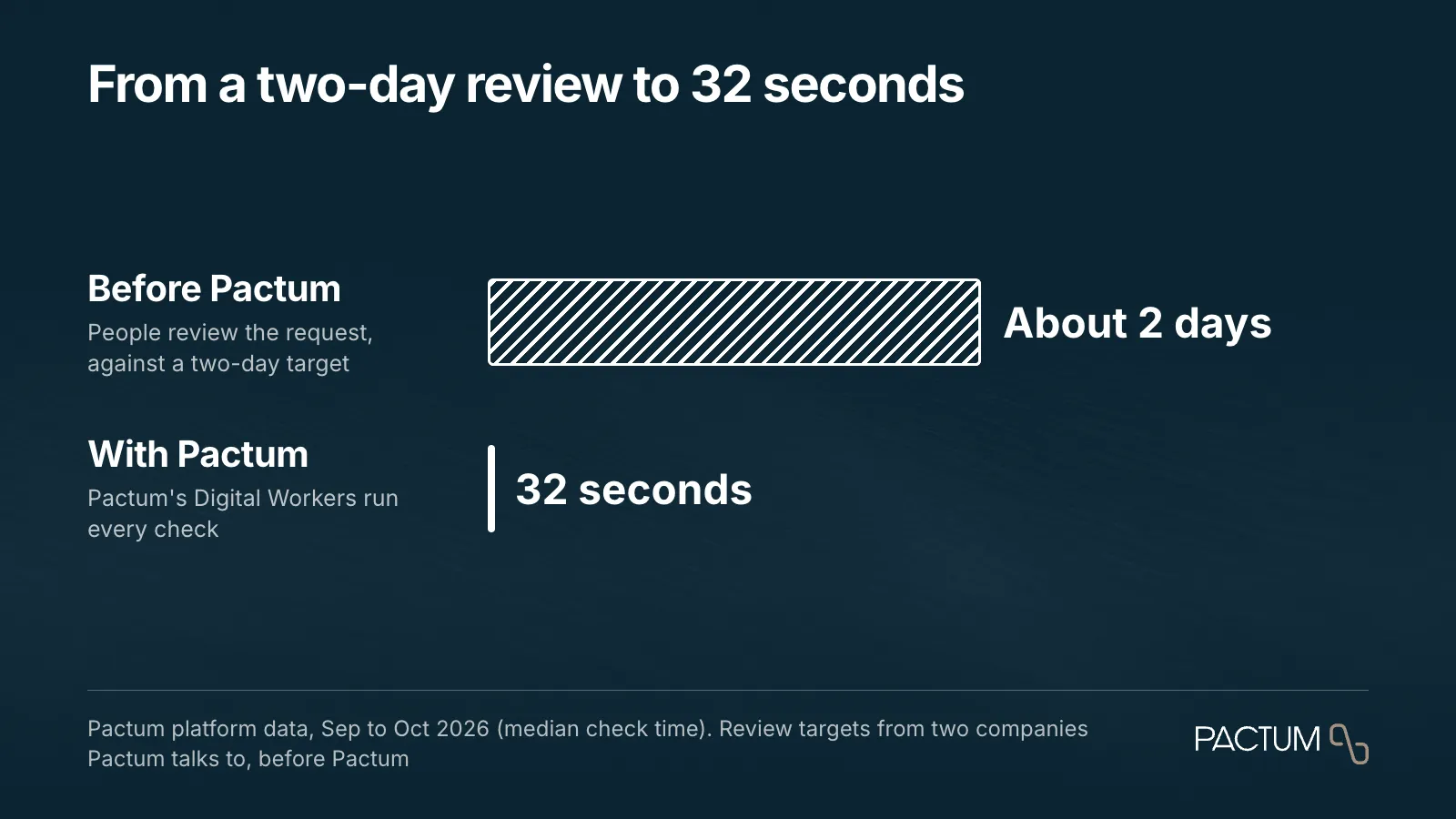
Before a purchase requisition can become an order, someone has to confirm that the request is compliant, that it's on the right buying route (a catalog, a contract or a new buy), that the right suppliers are engaged and that a single-source request doesn't need to go to competition. Two companies Pactum talks to had a target of about two days for that review before Pactum, and Pactum's Digital Workers now run the same kinds of checks in a median of 32 seconds.
How long do the checks on a purchase requisition take?
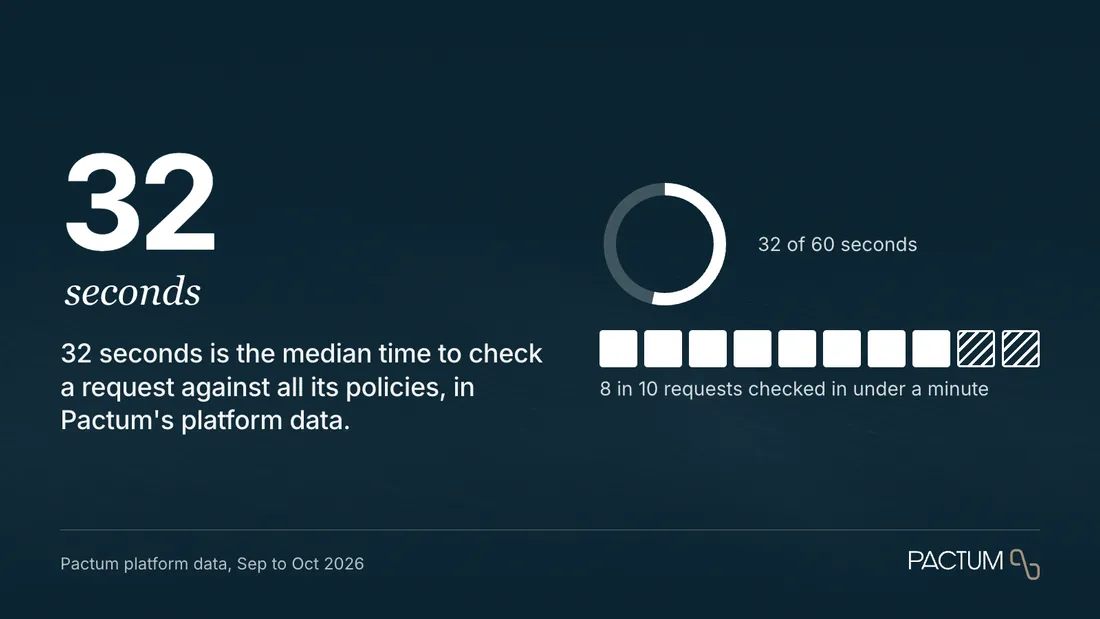
In Pactum's platform data, 32 seconds is the median time to check a request against all its policies, counted from when Pactum receives the request, and 8 in 10 requests are checked in under a minute, across the 50,000+ requisition checks the Alignment Agent runs a month.
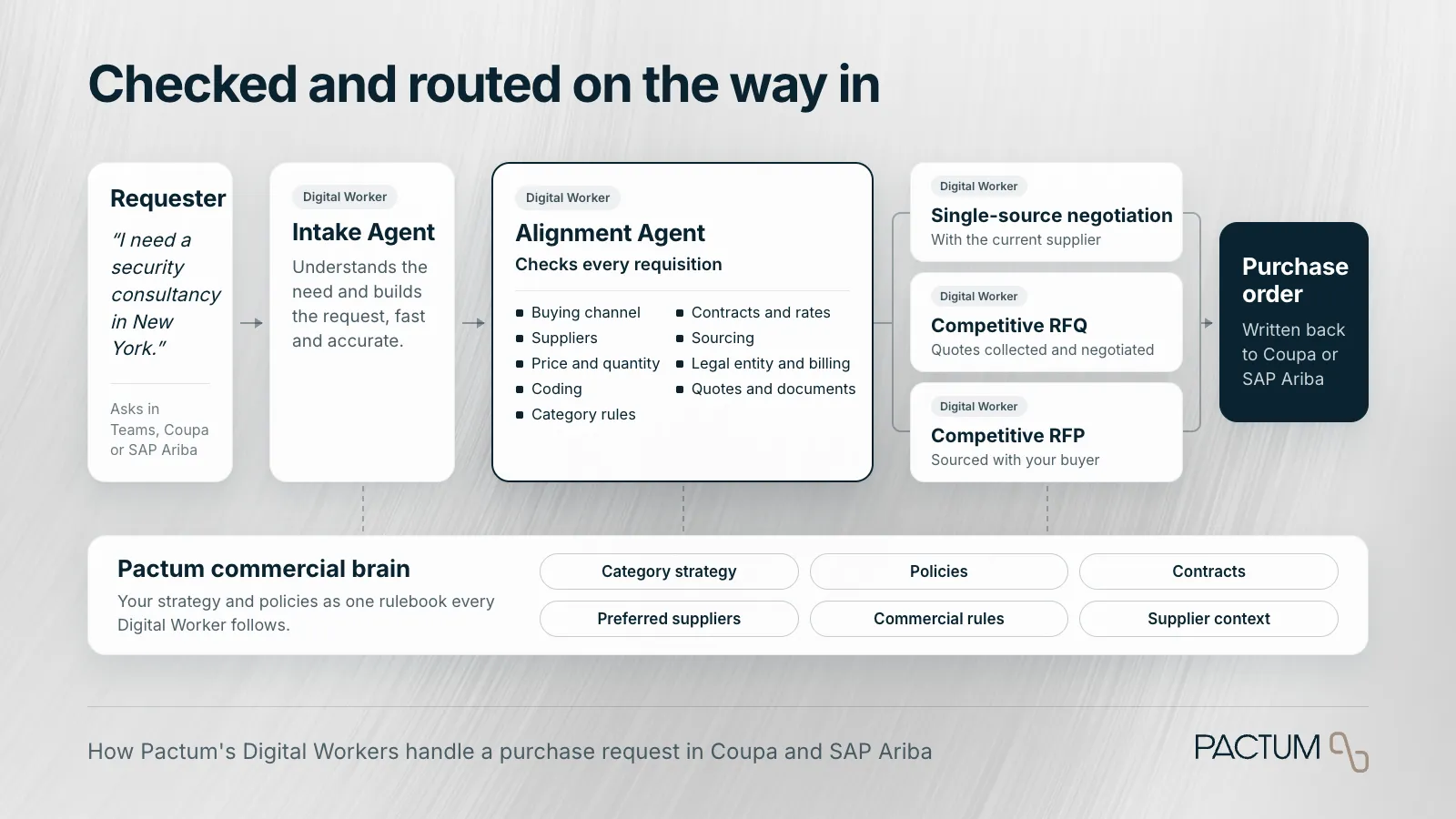
Every company switches on its own mix of rules, drawn from Pactum's library of ready-made checks and its own policies, and they all run at once on each request. The checks Pactum's customers run in production today fall into nine families:
- Buying channel: whether the request is on the right route, such as a catalog, a contract, a blanket order or a new buy, and whether it was raised before the spend rather than after.
- Contracts and rates: whether the supplier has an active contract, and whether the prices match the agreed rates or rate card.
- Suppliers: whether the supplier matches the record and is approved or preferred for that category.
- Sourcing: whether a single-source request should have gone to competition, and whether it leaves enough time to source.
- Price and quantity: whether line prices, totals, currency and quantities add up.
- Legal entity and billing: whether the right legal entity and bill-to entity are being charged.
- Coding: whether the category, line type and unit of measure are right, and whether a free-text line is really a catalog item.
- Quotes and documents: whether a quote is attached and still valid, whether its payment terms follow policy, and whether attachments raise export-control or restricted-country issues.
- Category rules: extra checks for categories such as IT hardware and software, shipping charges or delivery locations.
Where people still do the review, the time goes into waiting. A request sits until a buyer or an approver picks it up, goes back to the requester for a missing detail, and then waits again.
With Pactum, those checks are part of intake, so a request is checked as it's made instead of waiting in a queue afterwards:
- The requester tells Pactum's Intake Agent what they need, in Microsoft Teams, Coupa or SAP Ariba.
- The Intake Agent sorts out as much as it can up front, finding the right item, supplier and details and building the request.
- The Alignment Agent audits the finished request against every check, works anything that fails through with the requester, and hands the request to Pactum's sourcing and negotiation Digital Workers when there's a better deal to find.
When Pactum's Alignment Agent passes a requisition on every check, that pass can stand as the approval, so the request skips the buyer's manual review in Coupa and moves straight on.
How many approvals does a purchase requisition need?
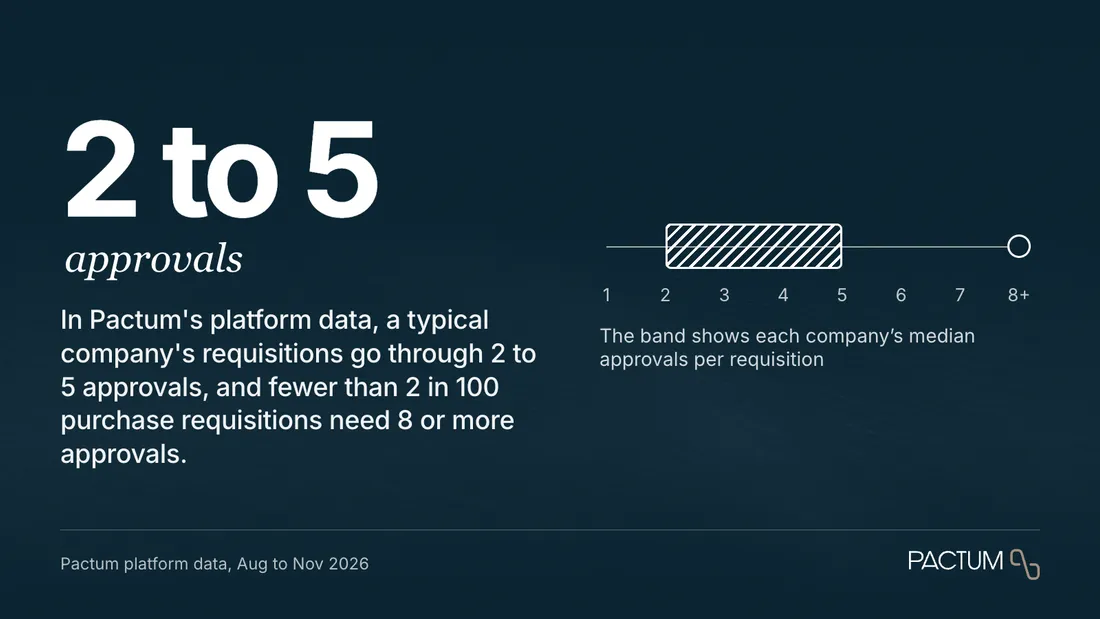
In Pactum's platform data, a typical company's requisitions go through 2 to 5 approvals, depending on how the company has set up its approval chain.
Approvers join for good reasons, such as a value threshold, a category like software that needs IT, or a risk flag that pulls in legal, and every one of them adds to a queue of further checks and approvals. When Pactum's Digital Workers handle the requisition checks, a request that passes every check skips the buyer's review entirely, so there's no queue for it to wait in.
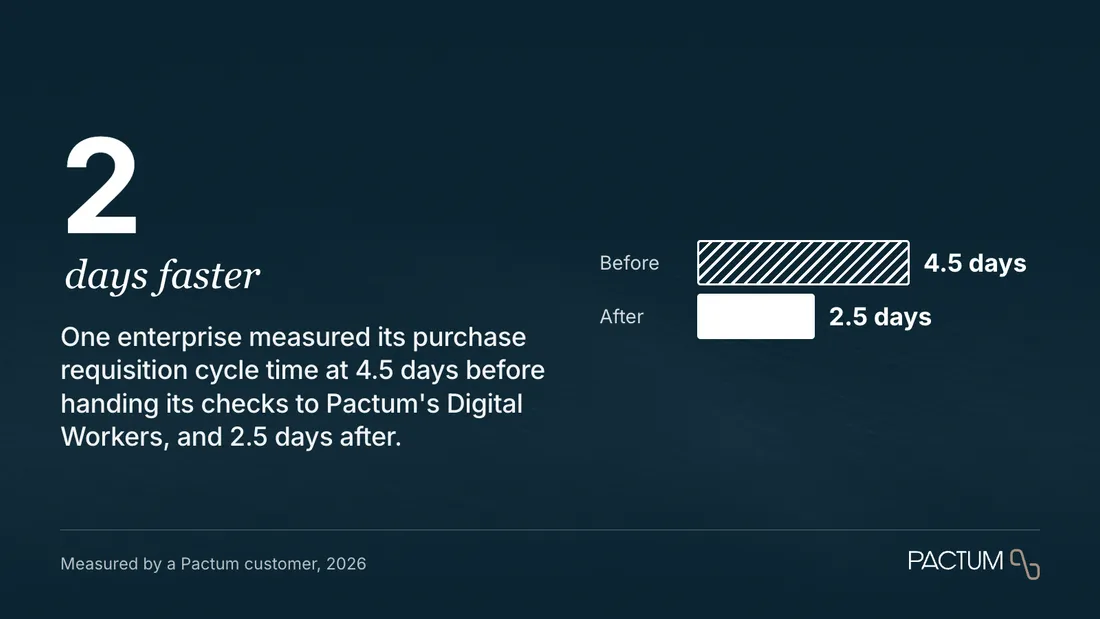
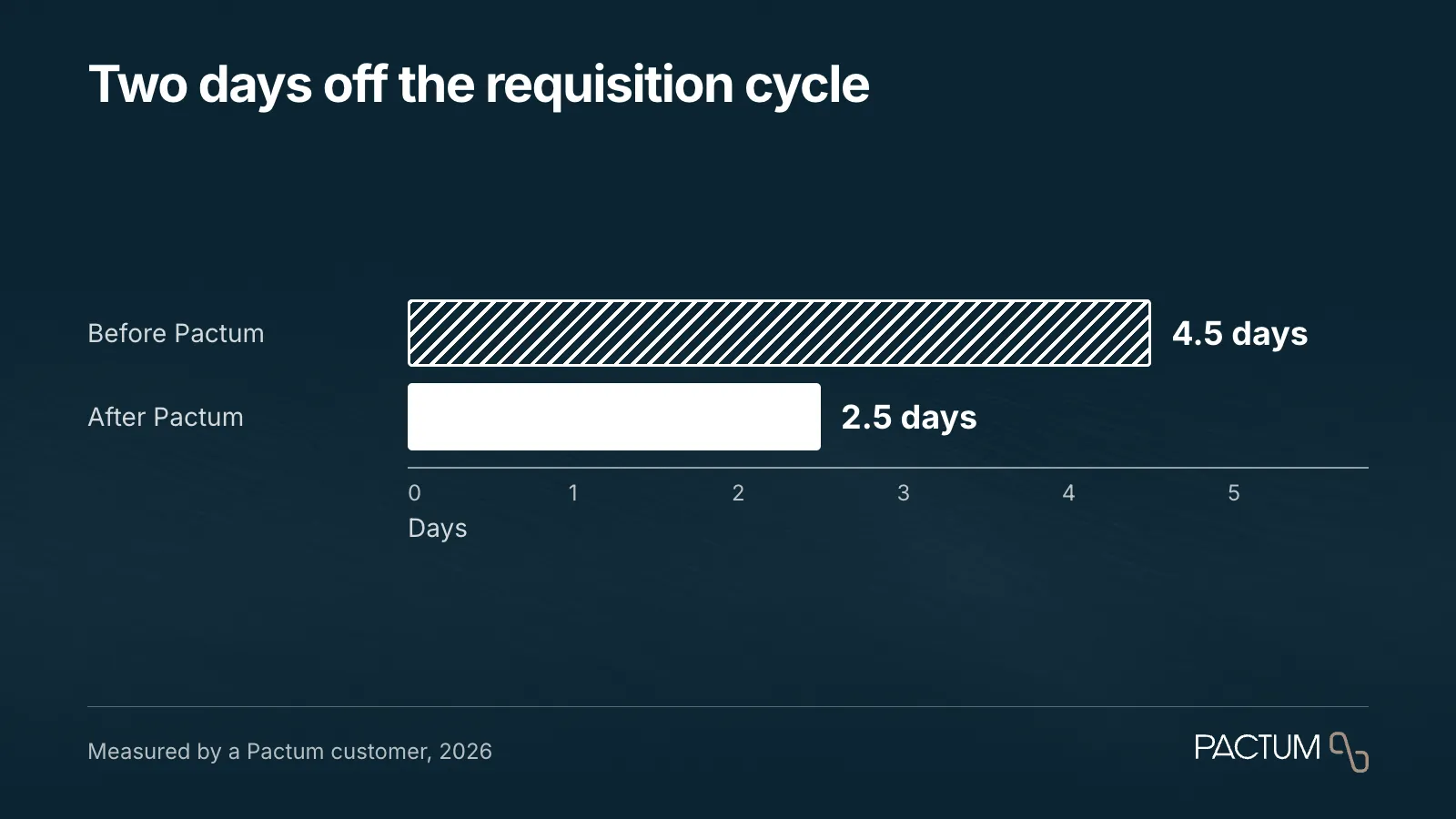
One enterprise shows what that does to the requisition cycle. It measured its purchase requisition cycle time at 4.5 days before handing its checks to Pactum's Digital Workers, and 2.5 days after, a fall of more than 40%.
The time the checks give back can go on the work that usually gets skipped. Pactum's cross-customer benchmark shows that 70% of never-negotiated requests hold a saving, worth up to 8%.
Pactum's Digital Workers cover all of a company's spend, from the smallest tactical buy to a complex sourcing event, so where a request goes after the checks depends on what it needs. On tactical buys, the tail spend and "messy middle" that rarely get a buyer's attention, they run the sourcing and the negotiation and bring the buyer the negotiated options to pick from, so those savings come with little extra work for the team. The larger, more complex purchases go to a buyer, who leads the sourcing with a Digital Worker running the bids and the back-and-forth with suppliers.
Is eight approvals on a purchase requisition normal?
Eight approvals on a purchase requisition is unusual: in Pactum's platform data, fewer than 2 in 100 purchase requisitions need 8 or more approvals. Those figures come from the requisition's own approval record, so they leave out the gates some companies put in front of a sourcing project, such as budget, legal and IT security sign-off.
When requisitions routinely collect eight approvals, the useful exercise is to walk the chain one approver at a time and ask which of them makes a decision nobody else makes.
Should approvals run in parallel or one after another?
Approvals that check different things should run in parallel. Every approver added in sequence adds their whole wait to the cycle, so keep an approver in sequence only when their decision depends on an earlier one, such as a budget holder signing off before legal reviews a contract.
Pactum's Alignment Agent works the same way, running every check at the same time on one snapshot of the request, so a failing check never holds up the others.
Does purchase requisition approval time include weekends?
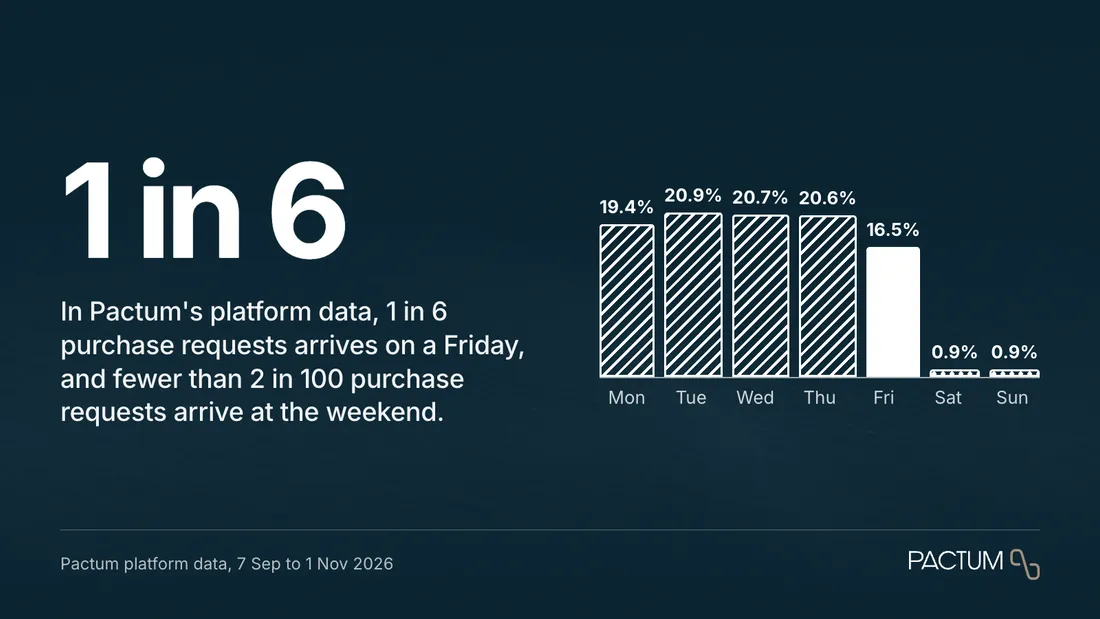
Purchase requisition approval time is best tracked in business days, the time a procurement team controls, with calendar days alongside, the time the requester actually waits. In Pactum's platform data, 1 in 6 purchase requests arrives on a Friday and fewer than 2 in 100 at the weekend, so a Friday request nobody picks up the same day loses the whole weekend before anyone looks at it.
That delay carries past the purchase order into everything that waits on it, such as a sourcing event or a negotiation with the supplier.
Where Pactum's Digital Workers check and approve requests as they arrive, a Friday request can be through every check and on its way to a purchase order before the weekend starts.
Does requisition to purchase order time include sourcing or negotiation?
Requisition to purchase order time usually doesn't include sourcing or negotiation in the organizations Pactum talks to. A requisition that falls outside a contract or catalog tends to go to purchase order with the supplier and price the requester picked, with no second quote and no negotiation.
Procurement teams describe the same pattern in their own numbers. One manufacturer estimates 85% of its purchase requisitions are pushed through to purchase order as they are, with no challenge, no sourcing, no negotiation and no savings captured. Another says 80 to 90% of its requests that never get negotiated arrive with a single offer.
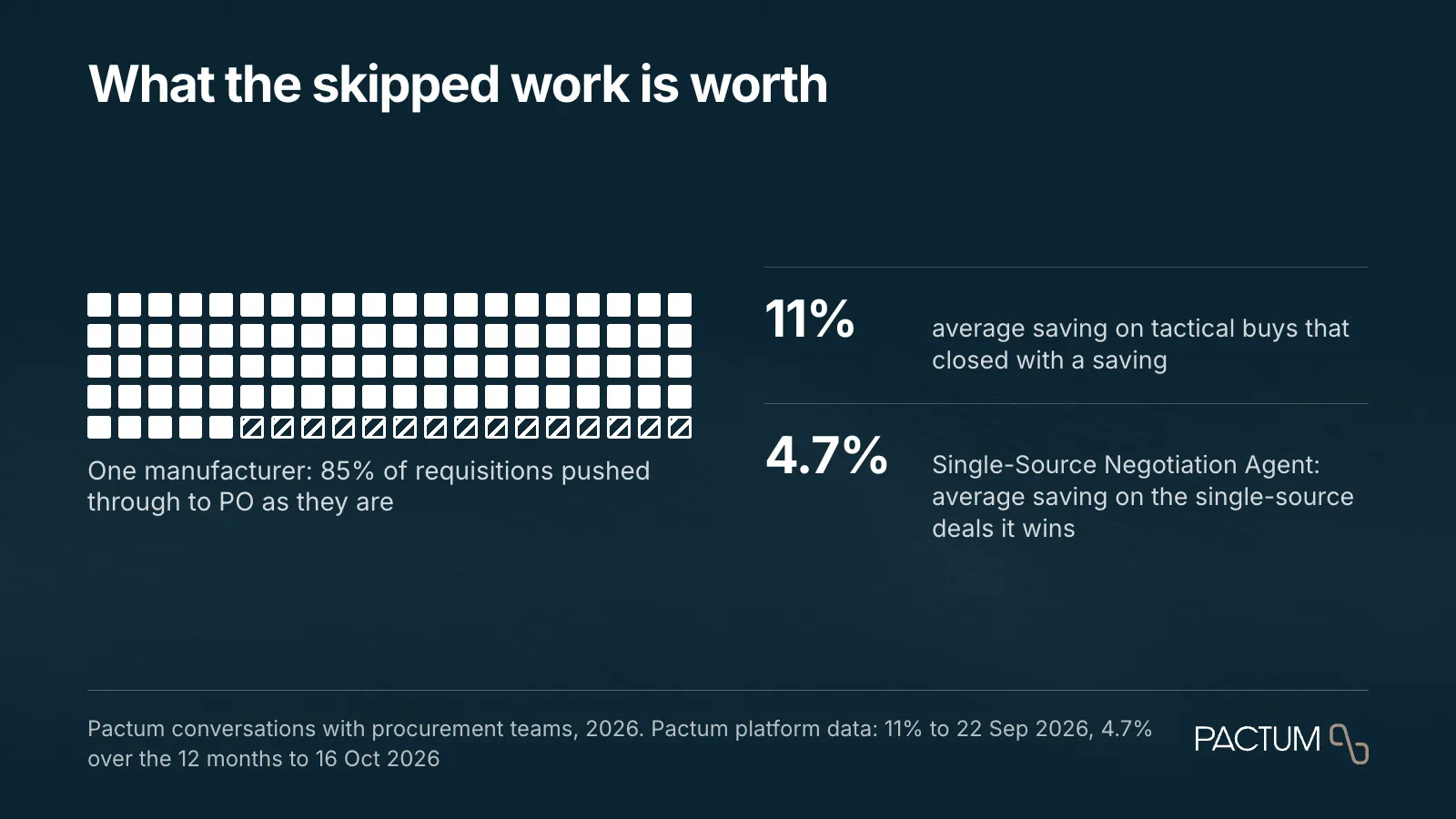
That untested spend is where the savings sit. Pactum's platform data shows an 11% average saving on tactical buys that closed with a saving, and the Single-Source Negotiation Agent shows a 4.7% average saving on the single-source deals it wins.
Where Pactum comes in
Pactum's Digital Workers handle a requisition from the moment it's raised to the purchase order, across all of a company's spend. It starts with the Intake Agent, which requesters talk to directly in Microsoft Teams, Coupa or SAP Ariba, describing what they need in their own words while the agent asks for anything missing, so the request arrives complete, buying gets far easier for the people doing it and everything upstream of approval moves faster.
Where a company keeps its existing request forms, the Alignment Agent picks up each new request as it's raised in Coupa or SAP Ariba and carries on from there.
Intake Agent
Builds the request with the requester, finds the right category and supplier, and reads the quote the requester attaches, so the checks have what they need.
Alignment Agent
Checks every requisition and approves the ones that pass, so they skip the buyer's review, and works anything that fails through with the requester or brings in the right approver.
Sourcing and negotiation Digital Workers
Take over when there's a better deal to find. The Tactical Sourcing Agent collects competitive quotes and negotiates the result, and the Single-Source Negotiation Agent negotiates a better deal with the current supplier.
Procurement teams can start any Alignment Agent rule in observer mode, where it records what it would have decided without acting, and switch it on once they trust it.
If requisitions spend days in approval and still reach the purchase order at the price the requester typed, it's worth asking what all those approvers are protecting.
FAQ
How do you measure purchase requisition approval time?
Measure approval time from submission to final approval, and the full cycle to purchase order separately, because the order is what the requester is waiting for. Track business days and calendar days side by side, report the median and the slowest requests, and split the figures by buying route.
Is three to five days normal for a purchase requisition?
Three to five days is common, but it's slow for a routine request. One enterprise measured its purchase requisition cycle time at 2.5 days once Pactum's Digital Workers took over the checks, and on-contract requests that take three to five days are sitting in a queue, because nothing about them is hard to judge.
Which approvals should only trigger above a threshold?
Approvals that need a specialist, such as legal, IT security or a senior budget holder, should trigger only above a threshold, such as a spend limit, a category or a risk flag, because most requisitions never need them.
Should procurement review every purchase requisition?
Procurement doesn't need to review every purchase requisition. A routine request that passes every check and buys from a contracted supplier has nothing left for a person to judge, so keep people for the requests that need judgment, such as a new supplier, no contract or a high value.
Is a purchase requisition the same as a job requisition?
A purchase requisition is an internal request to buy goods or services, while a job requisition is a request to hire someone. Every figure on this page is about purchase requisitions.