Every booth at DPW Amsterdam said AI. The buyers were asking for autonomy.
I spent two days on the floor in Amsterdam, had more conversations than I can count, and came back properly hyped, because procurement teams have pretty much stopped asking whether to hand their work to AI and started asking how fast they can do it safely.
TL;DR
- Autonomous procurement was the theme of DPW Amsterdam 2026. AI was on almost every one of the roughly 120 vendor stands, but the buyers we spoke to wanted to know how much of the work could get done without a person, and loads of them turned up with budget already set aside.
- Very few vendors are offering true autonomy. Most of what's being sold as AI in procurement is a workflow with AI bolted on top, which helps each buyer do a bit more and still leaves them as the bottleneck.
- Intake got people to the stand, and end-to-end autonomy kept them there.Request, policy checks, approved suppliers and negotiation, all done by Digital Workers, with people only stepping in on exceptions (or whenever they want to).
- The jump to autonomous is a staircase. Teams loved the idea of starting in observer mode, where the Digital Worker watches your team, compares its own calls with theirs and earns its way up from there.
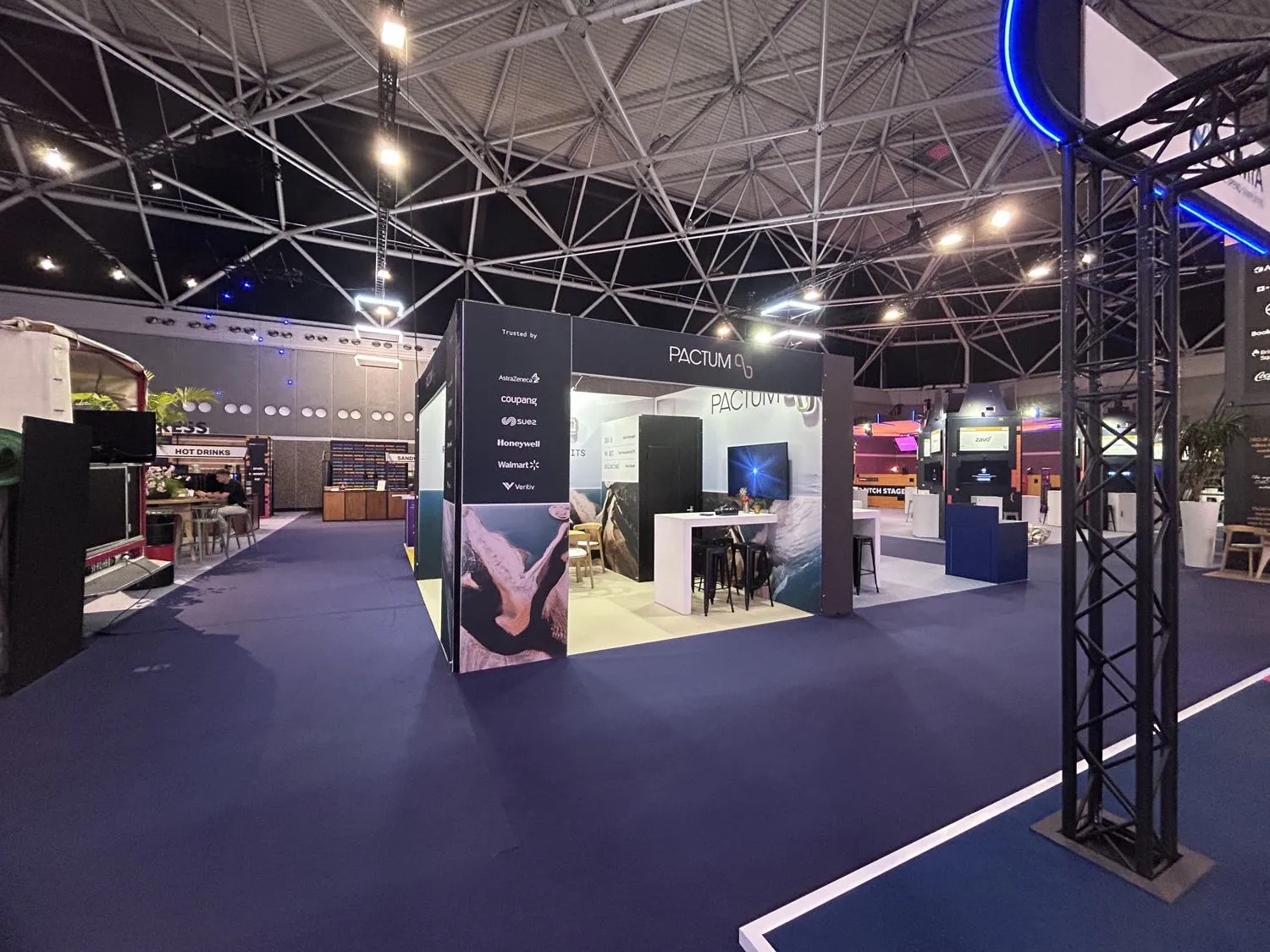
We were the only booth in the hall without AI written on it.
At DPW Amsterdam 2026, roughly 120 technology vendors were selling AI to procurement, and almost every one of them was saying it in exactly the same way.
I'd already noticed this at Procurement & Supply Chain Live, where everyone looked the same and said the same things, but Amsterdam was a whole new scale of it. AI was on pretty much every wall, every tagline and every screen in the building.
So we left it off our stand completely. It felt like a bit of a risk going in, and it turned out to be one of the best calls we made, because people genuinely walked up to tell us we were the only ones without it, and that was the reason they stopped.
Part of why it felt right is that AI has never been the shiny new thing for us. The reason I joined Pactum is that I saw them as the OGs of agents. They were negotiating with suppliers autonomously years before anyone called these things agents (back then the whole industry called them bots, a word that's having a bit of a comeback now, with Grok bot as a key marketing term).
That matters to me. I joined a company that had already proven this works, at scale, for years before LLMs turned up, and now it's combining its own AI models with LLMs, which in my view makes it pretty unstoppable.
Here's the thing about a hall where every sign says the same word: the word stops meaning much, and buyers start judging you on the work they can actually see getting done on a screen. Which suits us just fine.
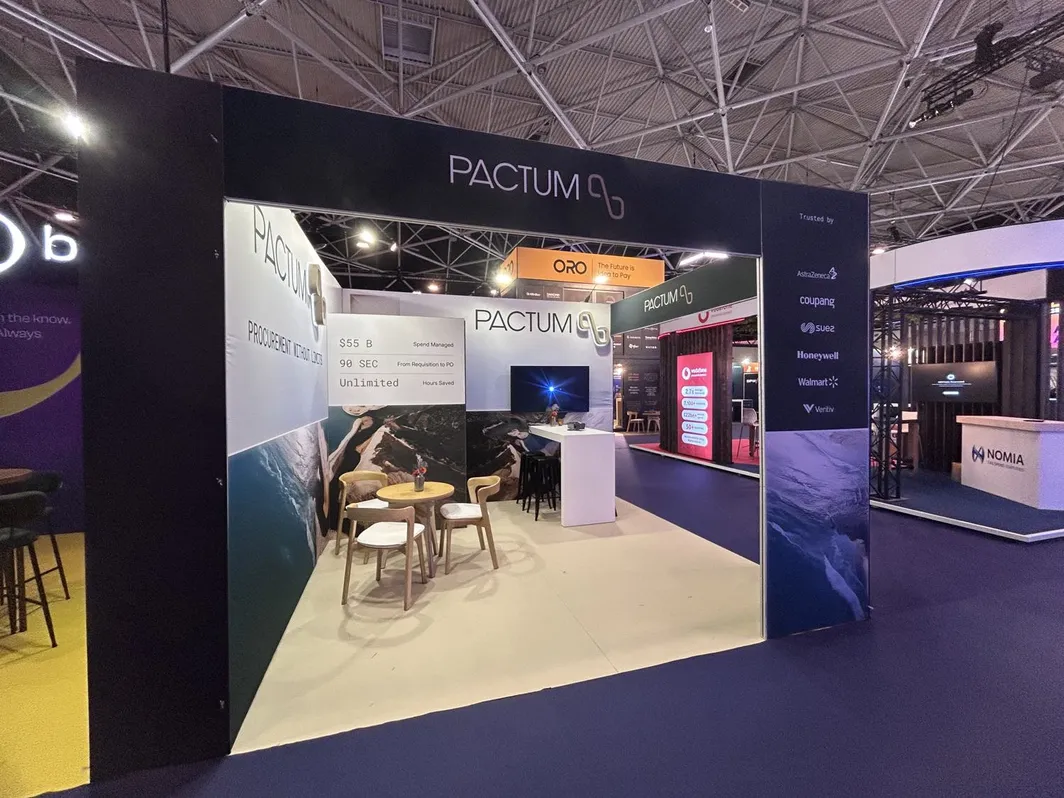
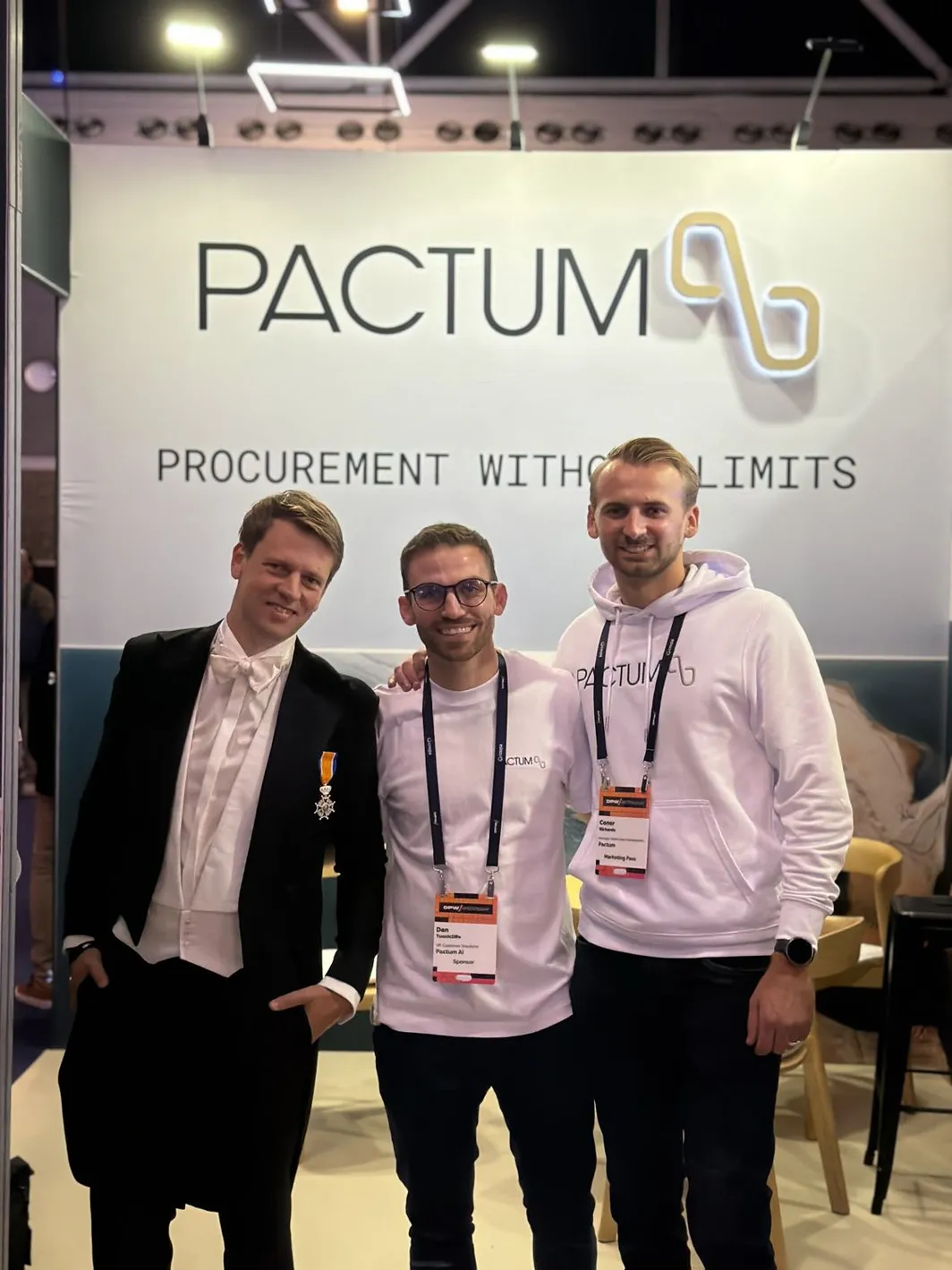
Autonomous procurement was the theme of the whole show.
Autonomy was the theme at DPW Amsterdam, full stop, and the buyers I met were well past asking whether AI belongs in procurement and onto asking how much of the work it can take off their plate.
Procurement has been on a ten-year cycle of committing to technology, so budget talk on its own isn't news, but this one felt different. People turned up with money set aside and a pretty clear idea of which work they wanted gone, and the emphasis, more than ever, was on the technology actually doing that work for them.
Very few people in that hall were selling true autonomy.
True autonomy in procurement means the work gets done end to end, with a person only involved when they're actually needed, and if I'm being honest, very few vendors in that hall were offering it.
What most were showing was a workflow with AI layered on top, aka a summary here, a drafted email there, a suggested supplier and a nicer screen to click approve on.
And to be fair, that does help. Buyers get a bit more done in a day, and I'd never tell anyone that's worthless. The problem is the buyer is still the one picking the work up, checking it and pushing it on, so the queue still forms at their desk and the whole team can only ever go as fast as its people. That's the bottleneck buyers kept describing to us, over and over.
Every requisition checked, before and after.
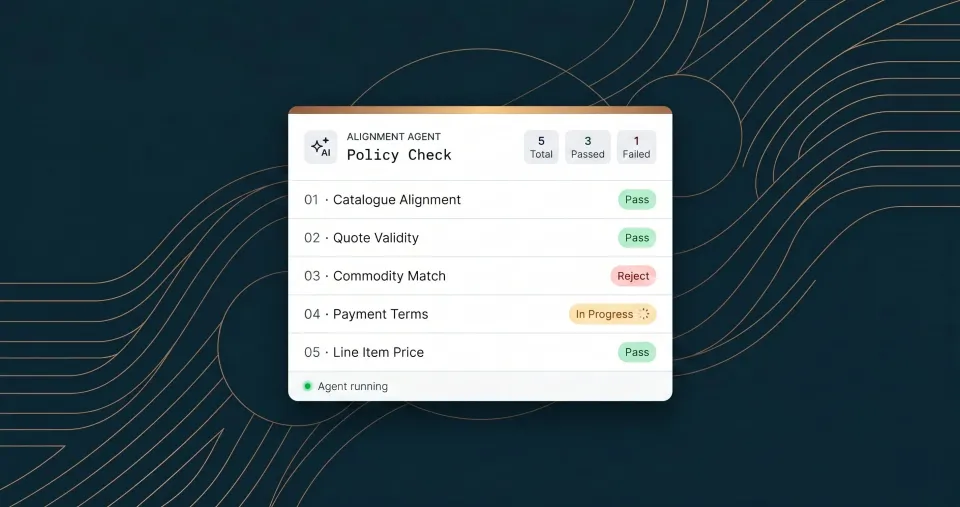
The same requisitions land in both lanes. Before, a buyer checks every one and the rest wait or slip through. After, Digital Workers check all of them and people only see the exceptions.
Intake started the conversation, and end-to-end autonomy kept it going.
Procurement intake was the most-demoed thing on our stand at DPW Amsterdam, and I watched it go up on the main screen well over 100 times in two days.
Everyone cares about upstream, aka what's the first thing you can do to make it easy for anyone in the business to buy what they need, the right way, without a week of back and forth?
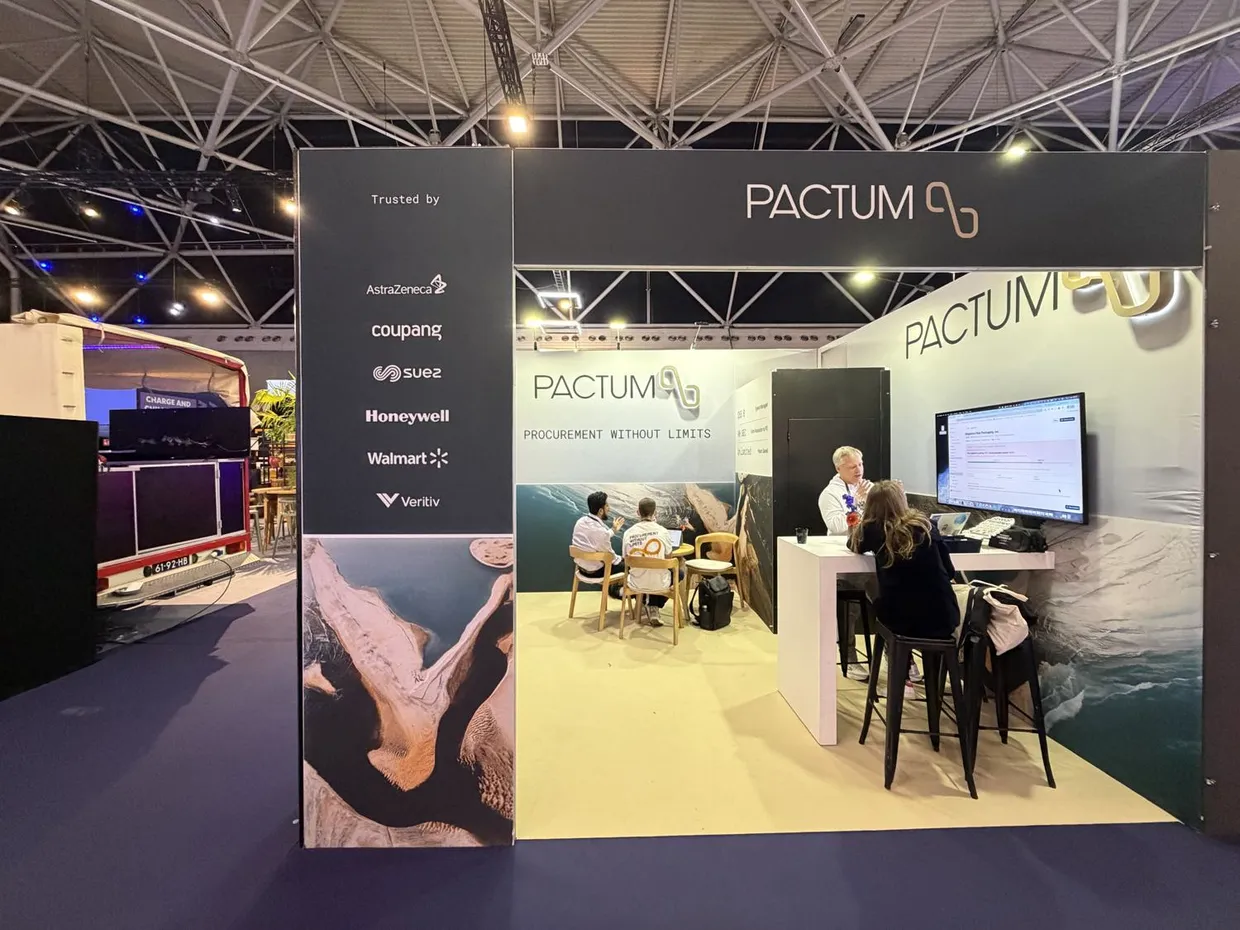
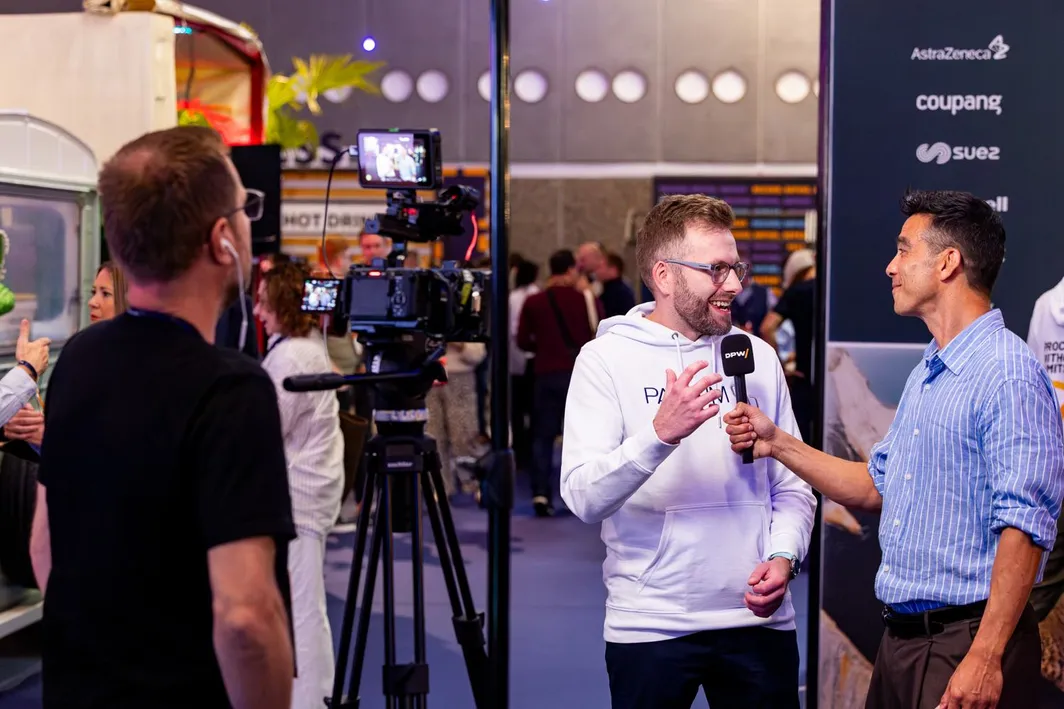
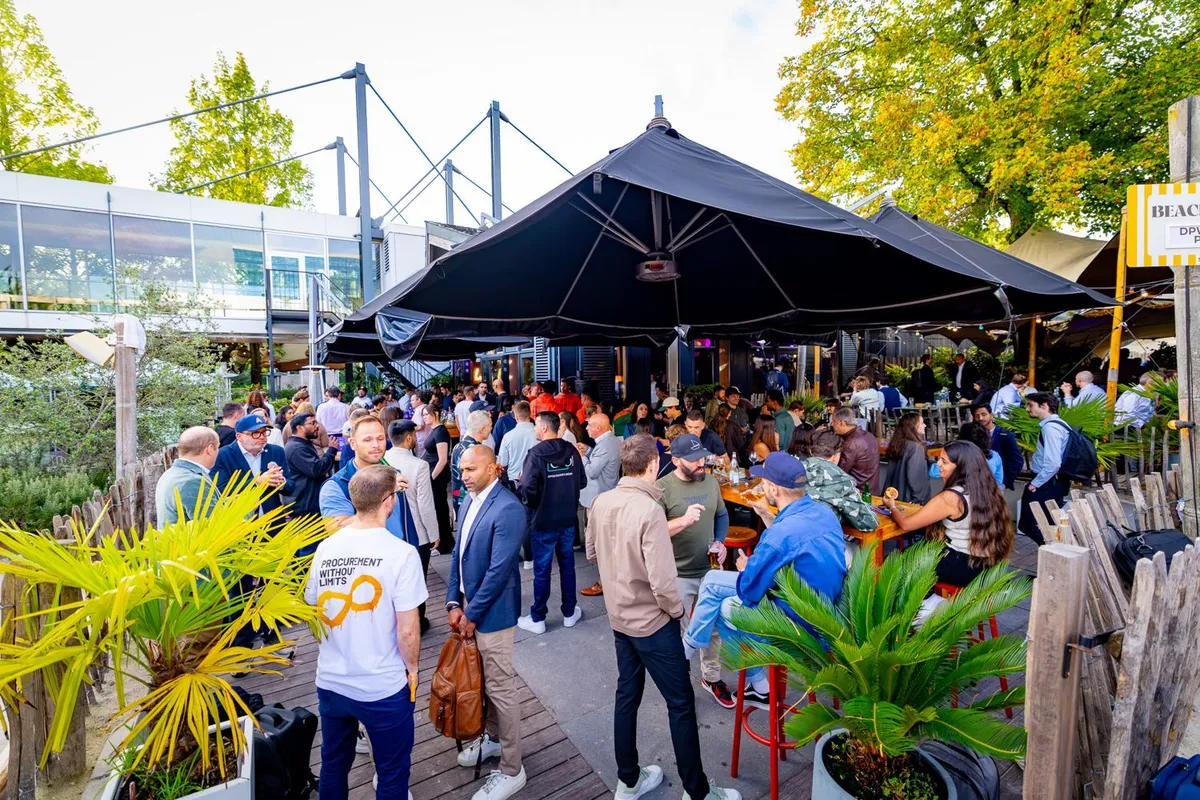
Our demo team ran it pretty much non-stop for two days straight, often with a little crowd round the table.
A team on SAP Ariba came over looking for an intake and orchestration tool, and left talking to us about having the work done instead.
A team halfway through a Coupa rollout told us their requesters still pick up the phone to suppliers to get anything moving.
One CPO wanted the whole run on top of Ariba: intake, alignment and negotiation, end to end.
Another asked for smart intake with no forms at all, so people just say what they need.
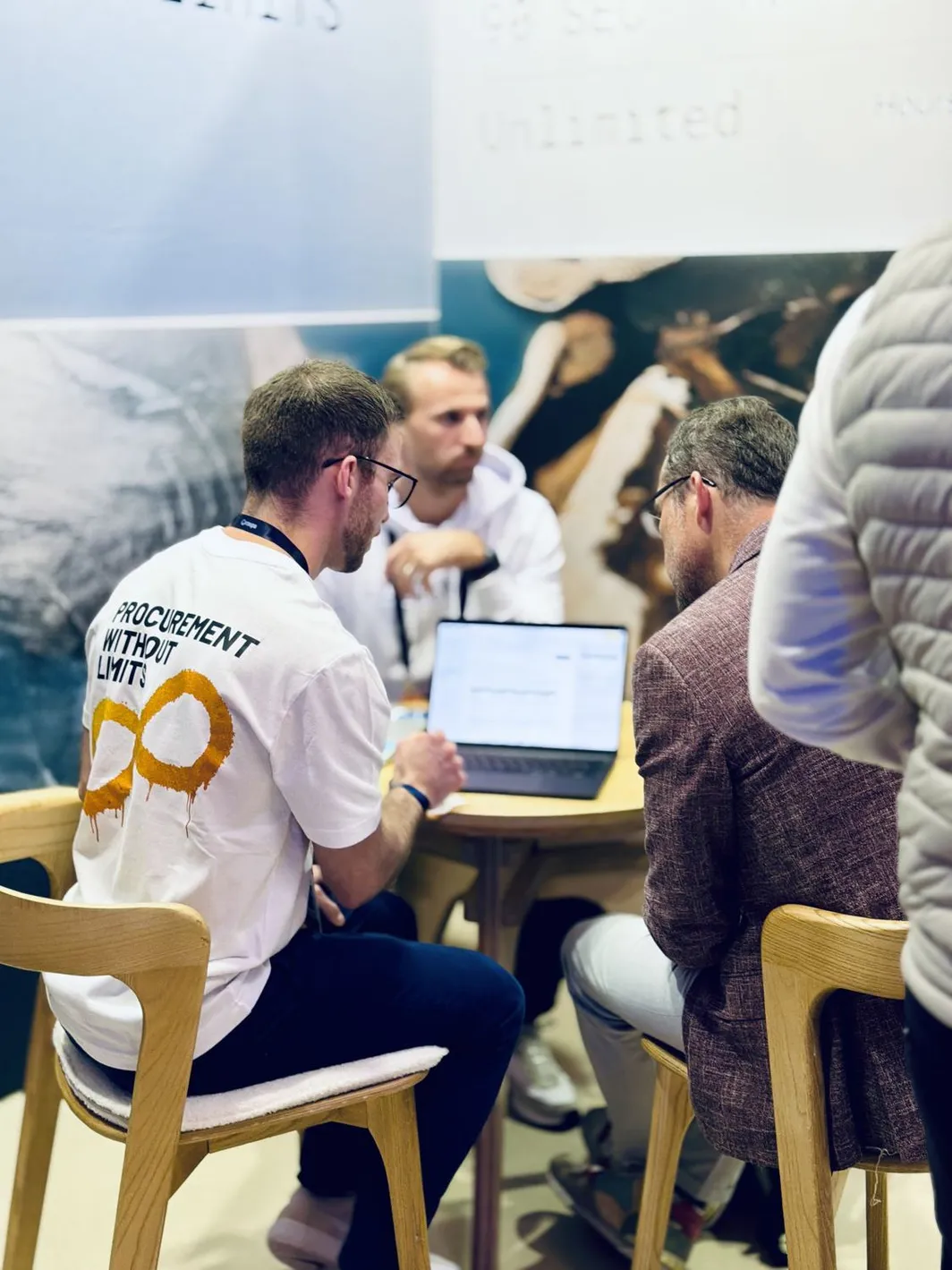
Loads of people came over to see negotiation, which is the Pactum they already knew, and were genuinely surprised when we showed them the whole thing. The Digital Worker starts at intake, runs every check, finds approved suppliers, negotiates with all of them, and your people only get involved for exceptions or when they want to be. That's the bit where the conversation really opened up.
The Alignment Agent took a bit more explaining, because the market doesn't really have a name for it yet. When it clicked, though, it really clicked: one maintained set of rules that every request and every agent gets checked against is what makes procurement work at all once agents are doing the work.
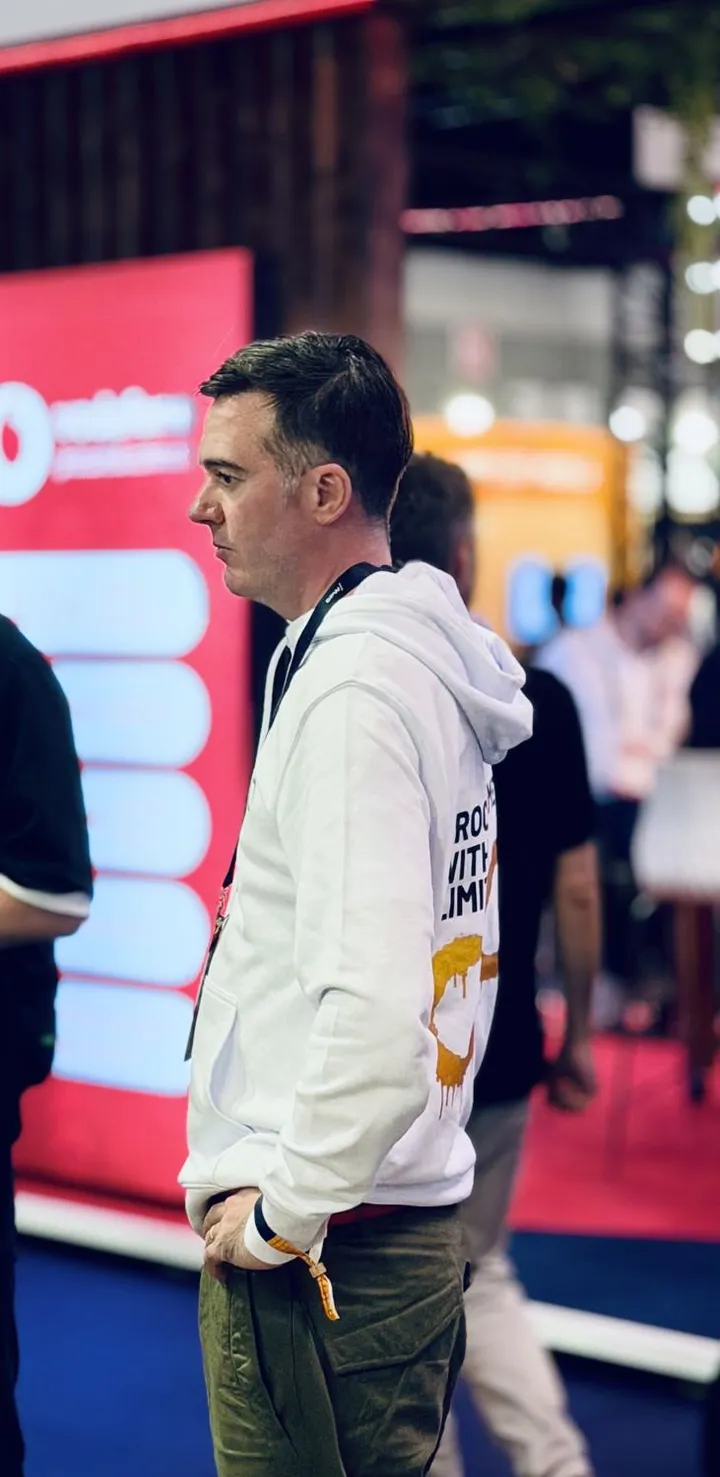
And for the bigger, more strategic stuff, advanced sourcing let us show the other end of the range, where the team tailors how suppliers get approached, breaks a requirement into lots like they would in an RFP, and takes partial or complete bids. Being able to go from fully autonomous to fully hands-on in the same place went down really well.
Most teams want to build on their suite, and more of them want out.
The question I heard most at our stand was "do you work in my existing ecosystem?", and for most of the room, the P2P and ERP systems they already run are exactly where they want to build.
Pretty much everyone who came over was already running one of the big suites, with years of data sitting in it. Apply a rough Pareto to it and about 80% want to build something better on top of what they have, which is great, because we play well in those ecosystems and were glad to show it.
The boldest thing I'd say about the whole event, though, is that I heard more people than ever before tell us they want to break away from incumbents and legacy tooling altogether, start again, and stop paying for systems that still leave the work to their people. That's a real change in tone, and I think it's worth taking seriously.
The good news is it doesn't have to be one or the other. The request can start wherever your people already work, the suite stays the record, and Pactum is the engine that does the work in between. And if the work needs to reach another tool, a legal review platform for example, that's a connection our team builds, and it's rarely a big lift.
The make versus buy question is getting answered.
Even the companies with the deepest engineering benches in the world are choosing to buy autonomous procurement rather than build it, and the best example I saw came on day one.
A senior leader who runs procurement AI architecture at one of the biggest tech companies in the world came to the stand. Even with everything they have, they'd been struggling to roll AI out across procurement, and they'd been weighing up whether to just build it themselves.
Their reasoning was simple, and I loved it. Their engineers are some of the best in the world, and also some of the most expensive, so why point them at a problem the market has already solved? They did a 40-minute demo on day one, and then over day two four more of their colleagues came back to see it for themselves.
If one of the biggest tech companies in the world would rather buy this than build it, that tells you exactly where the market is going.Daniel Barnes, Head of Marketing, Pactum
Orchestration came up in a few conversations too, usually as "we're looking at orchestration, so why would we need you?", which is a fair question. Orchestration did a real job when every step of a purchase needed a person, and getting the request to the right desk quickly was the best you could hope for. But if Digital Workers can do the checks, the sourcing and the negotiation up front, most of those hand-offs just aren't needed any more, and you keep your people (and your legal team) for the moments that genuinely need them.
The jump to autonomous is a staircase, and observer mode is the first step.
The safest way to get procurement to autonomous is in steps, starting with a Digital Worker that watches your team's work before it does any of its own.
The size of the jump came up a few times, and it's a fair worry. I spent most of the two days listening in on demos (when I wasn't bossing everyone around to go and talk to people), and I heard our team walk visitors up these three steps again and again.
Observe
It watches everything, and it learns everything.
- Sits in the background and checks every decision your team makes against the call it would have made.
- Learns your policies, your suppliers and how your people actually decide.
- Loads of options: watch one region, one business unit or the lot, and set it workspace by workspace.
Take on more
Prove the value where the risk is lowest.
- Let it act on the lower-risk stuff first, tail spend suppliers being the obvious place to start.
- Measure the value on your own requests, with your own suppliers, before you widen it.
- Hand it more each time it earns it.
Autonomous
This is where most of the value comes from.
- Unleash it across all your tail spend and the messy middle.
- Run set tasks with your strategic suppliers autonomously too.
- Your people see the exceptions, or step in whenever they choose.
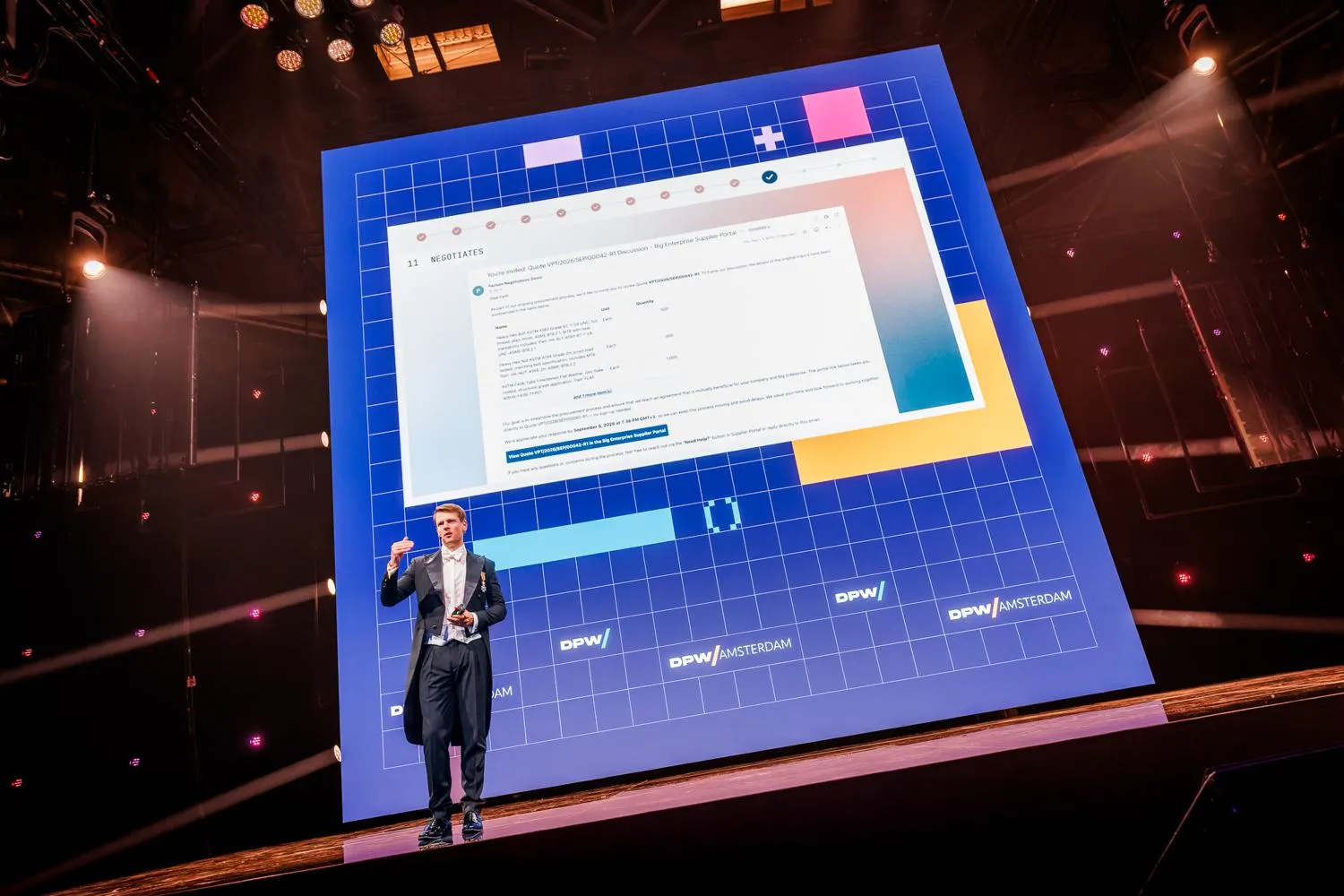
The sessions told the same story as the expo floor.
The sessions at DPW Amsterdam 2026 were packed, and the autonomy theme ran through the stages just as much as it ran through the hall.
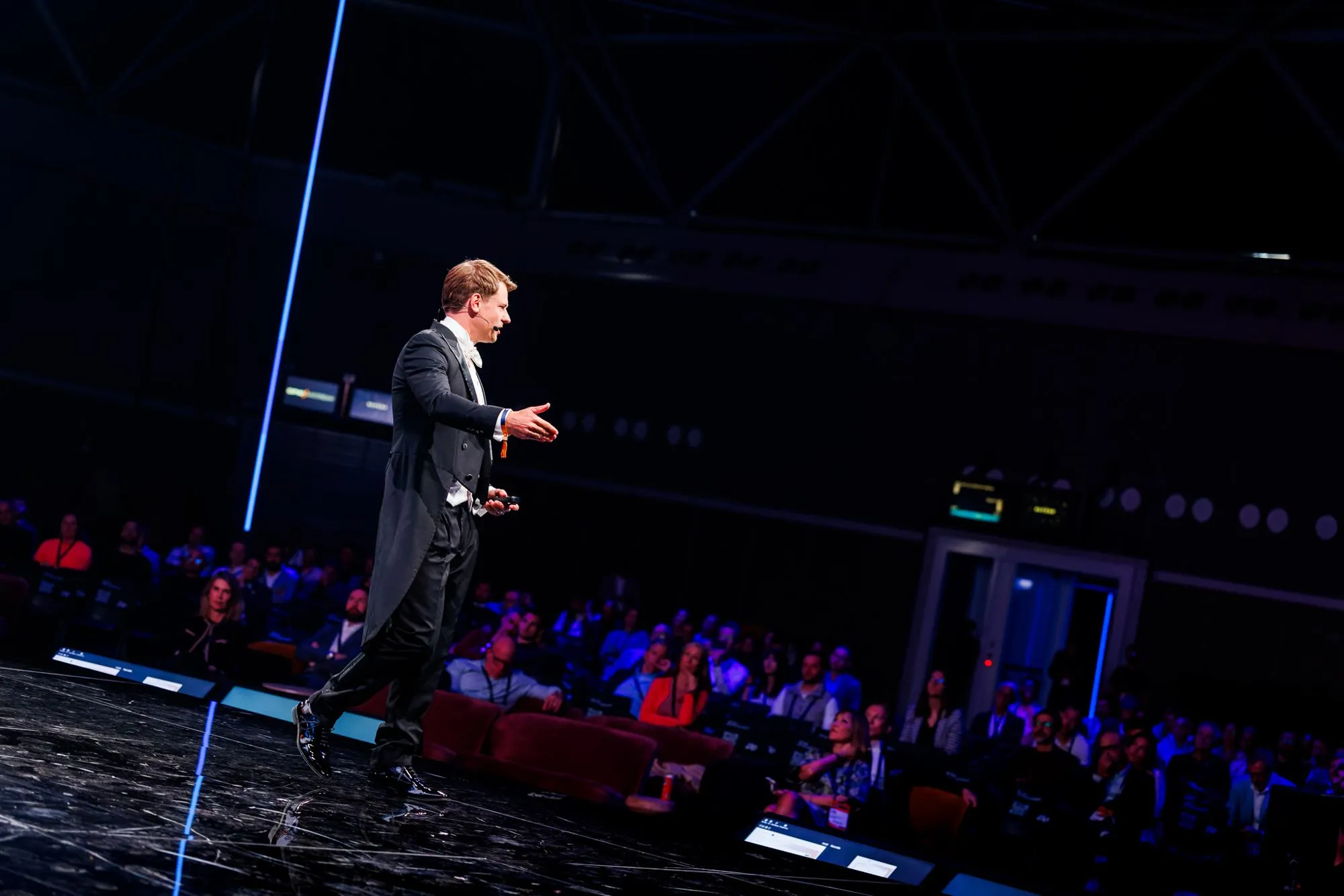
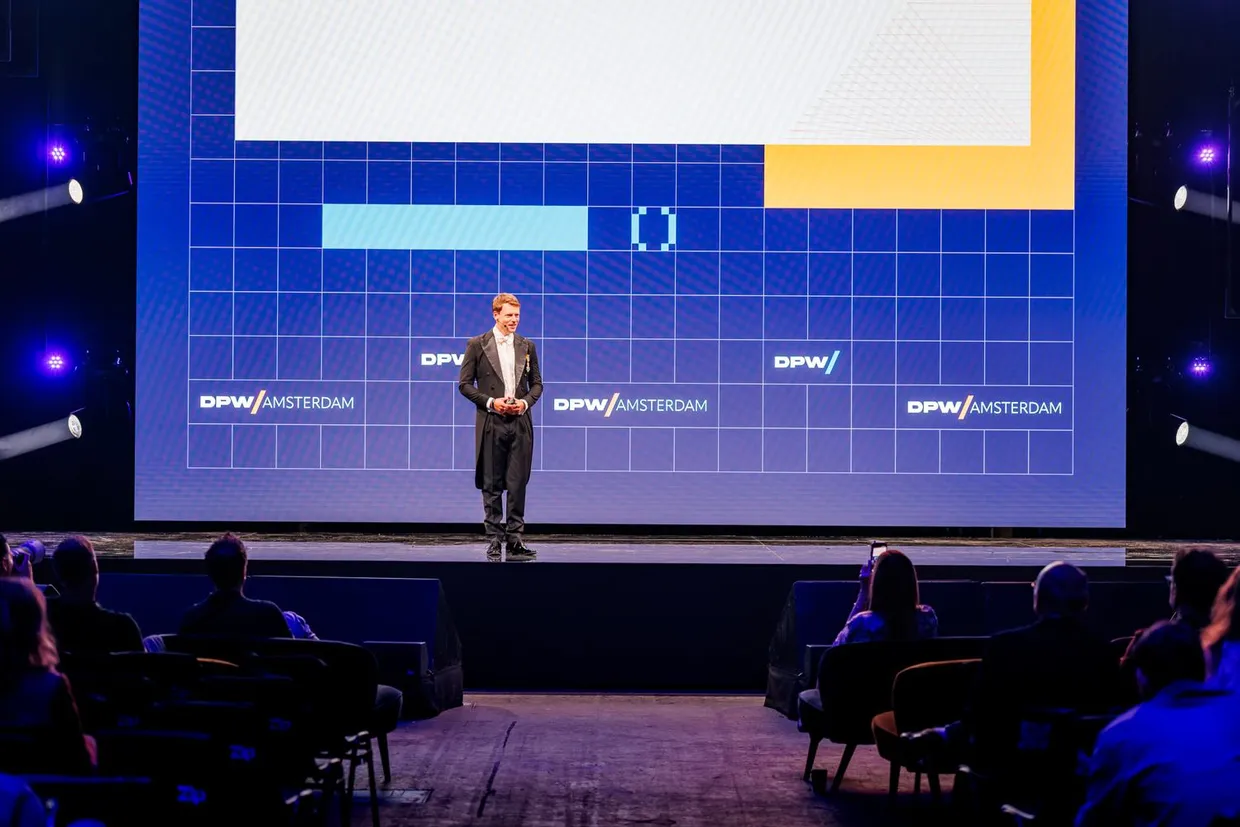
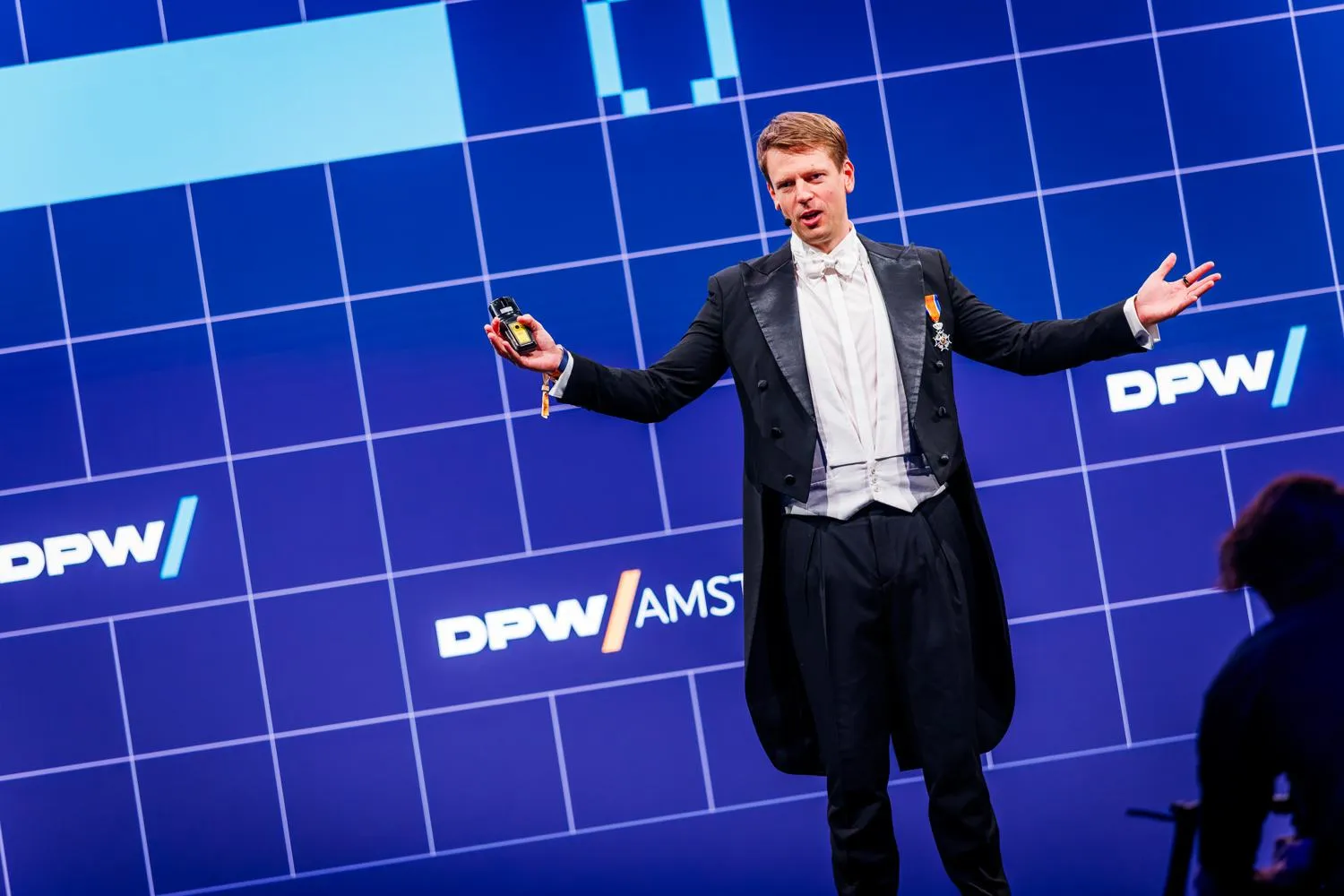
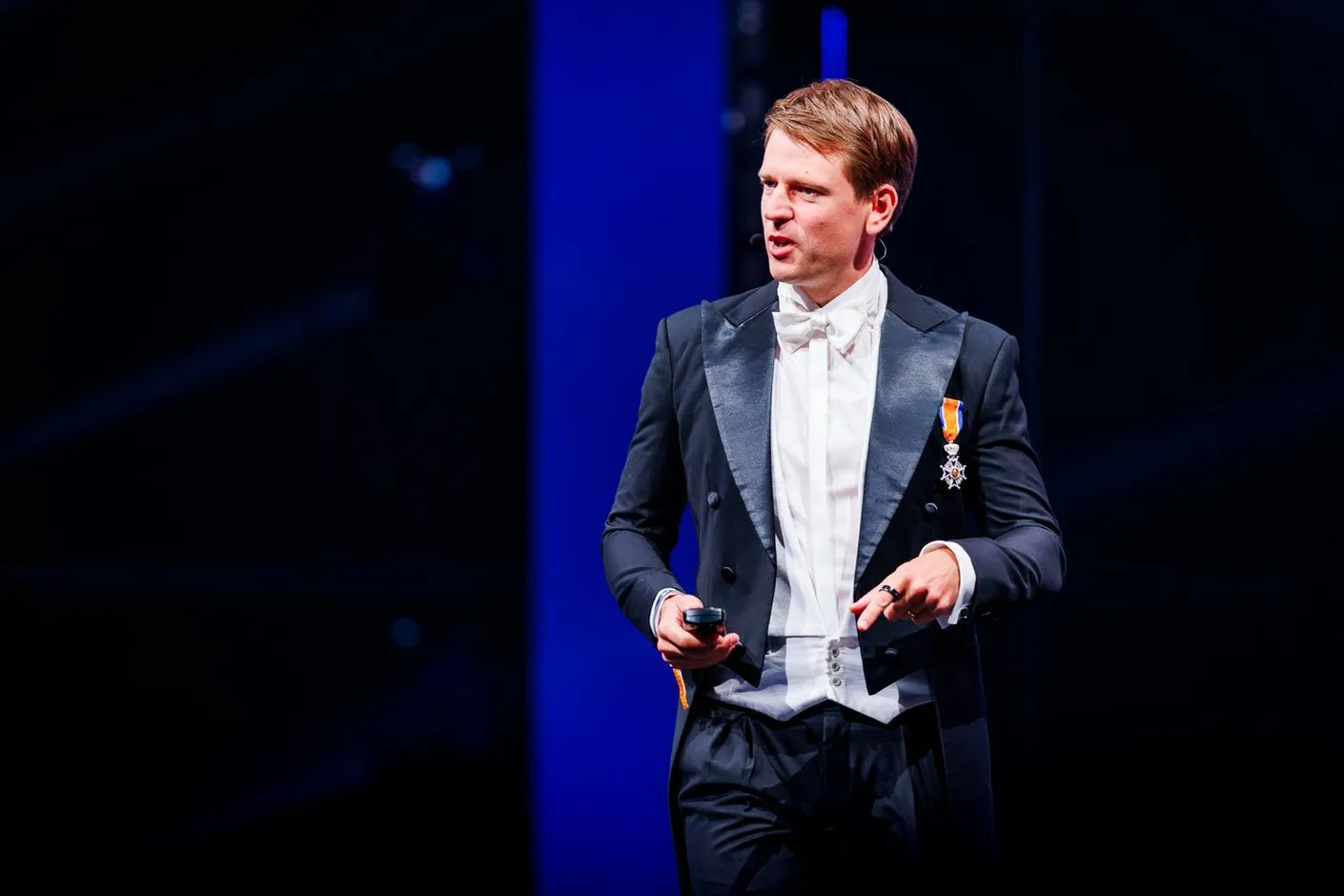
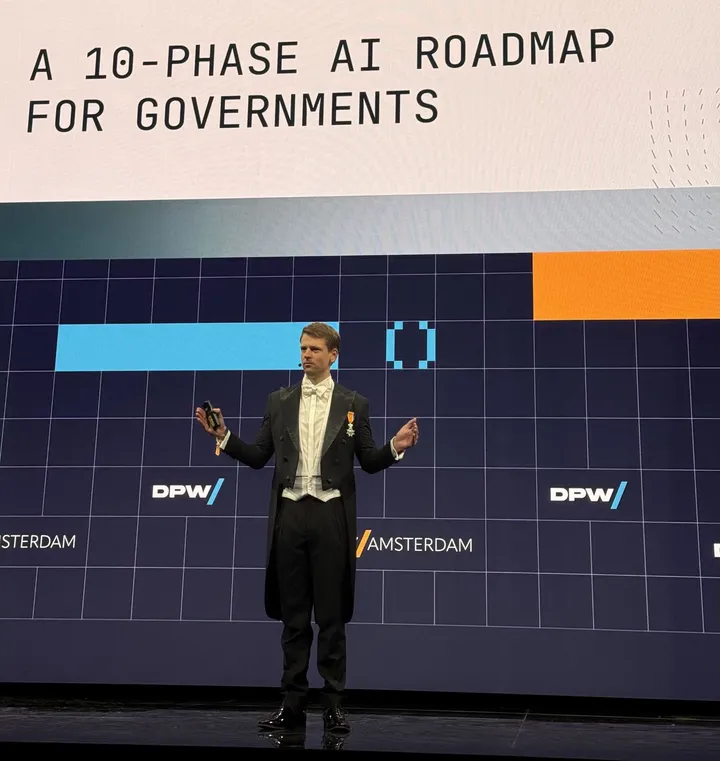
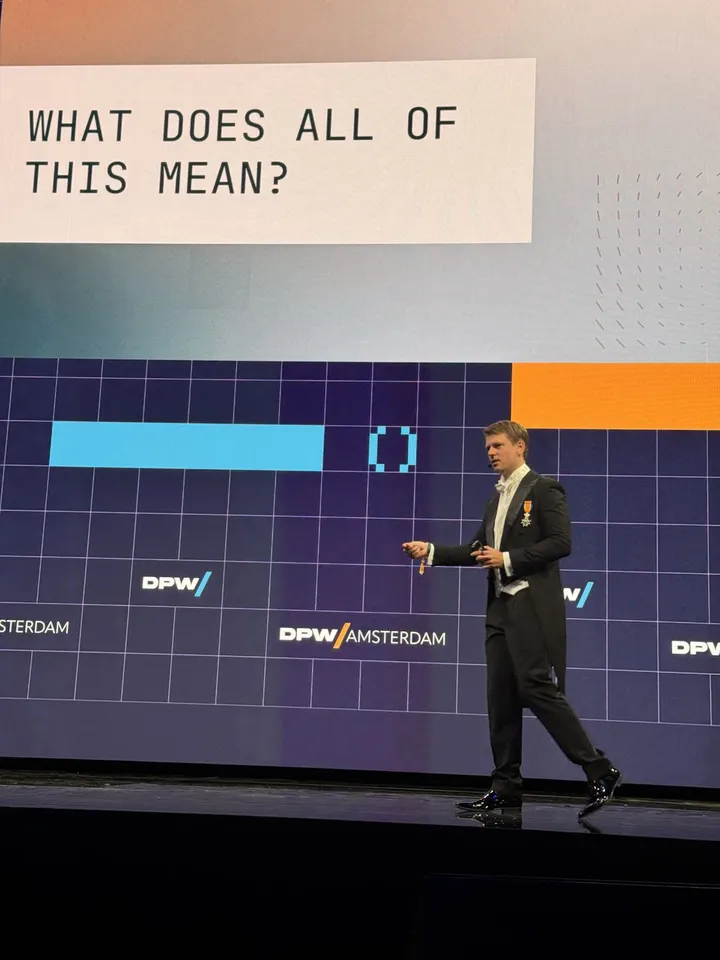
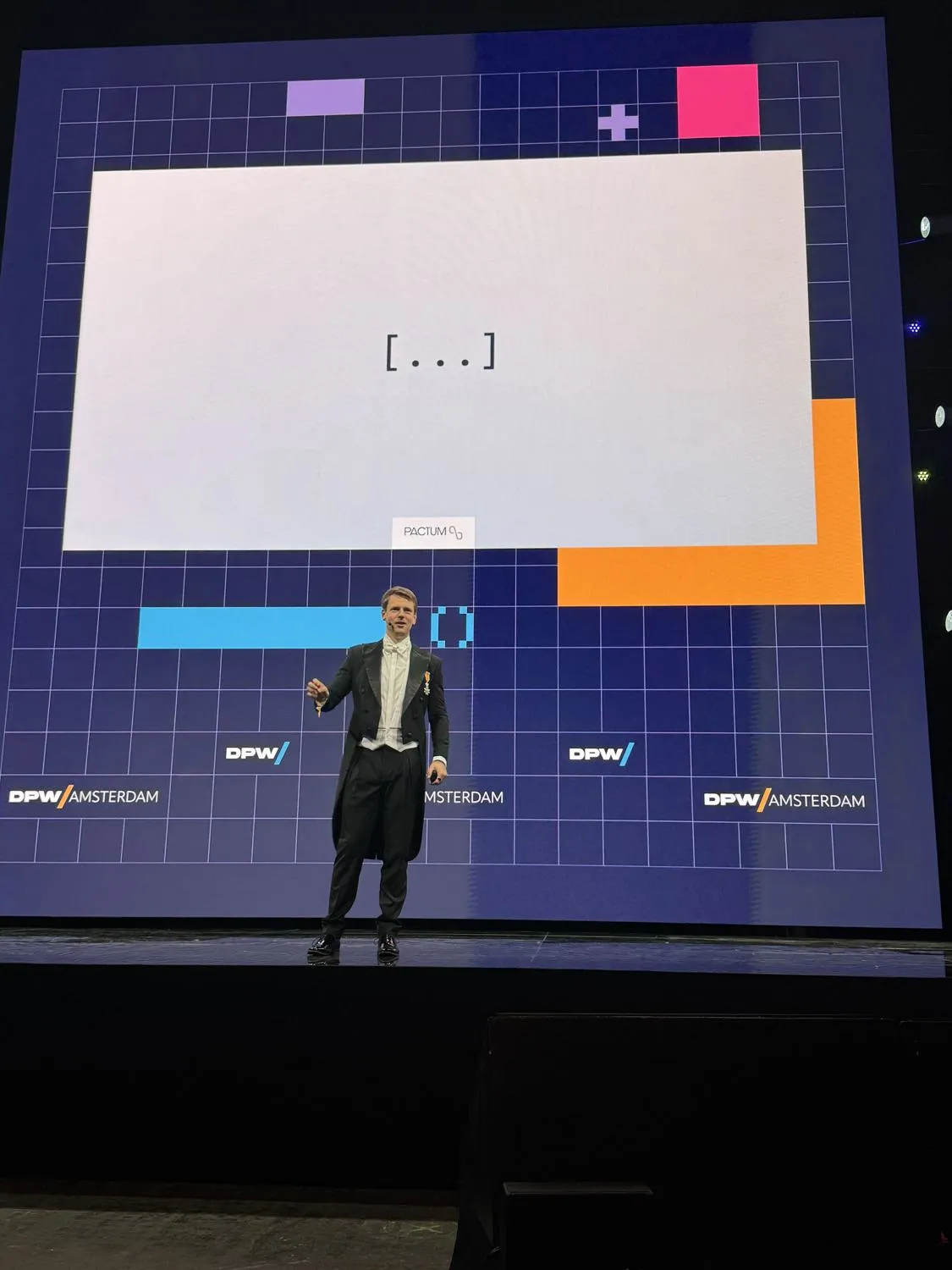
Our co-founder Kaspar Korjus took the center stage in full white tie for Agentic Nations and Enterprises, and he was brilliant. He covered how governments and companies are both learning to hand real work over to agents, and the new jobs that creates inside procurement, the AI architect for procurement being the one I genuinely can't stop thinking about.

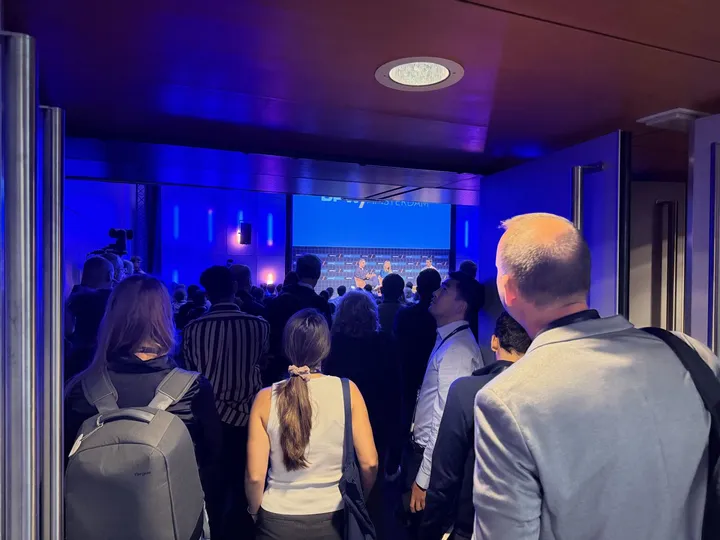
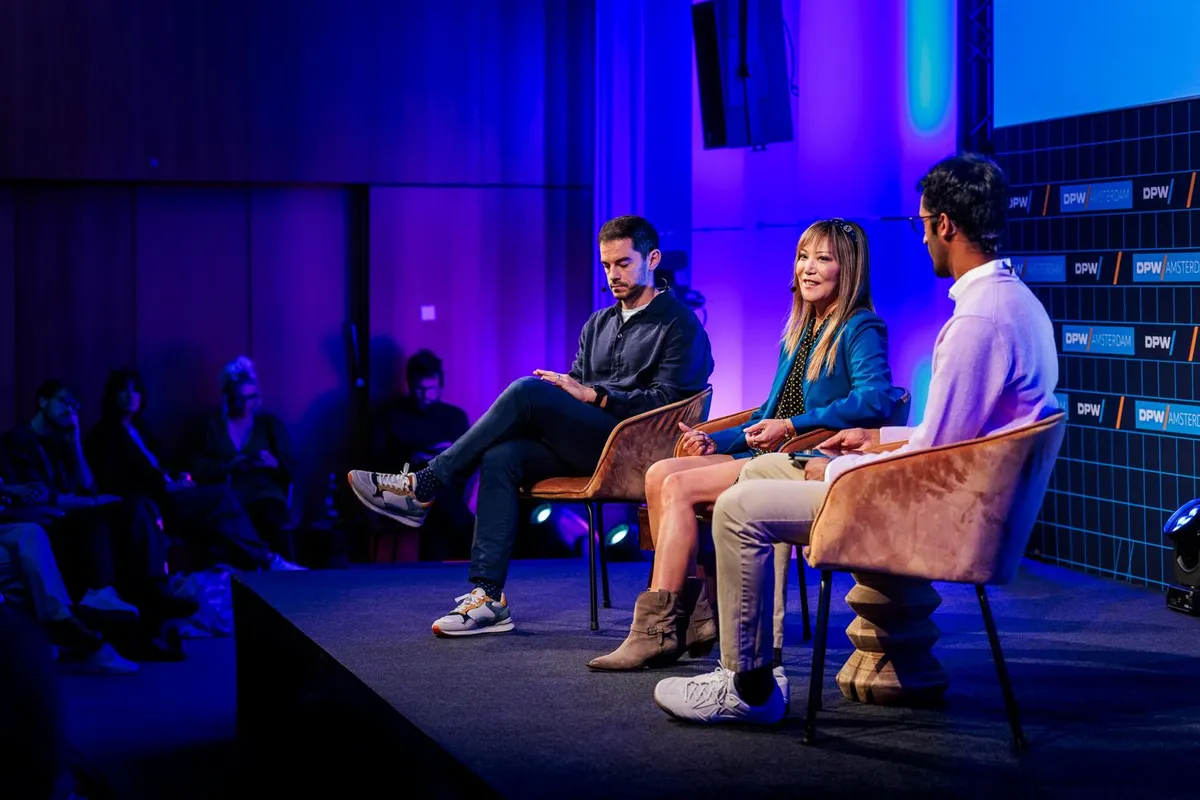
The other one I have to mention is the Rolls-Royce session on the Discovery stage. I didn't actually make it in myself, but people were lining up at the back and standing round the edges, which tells you how much appetite there is to hear from a team that's actually doing this.
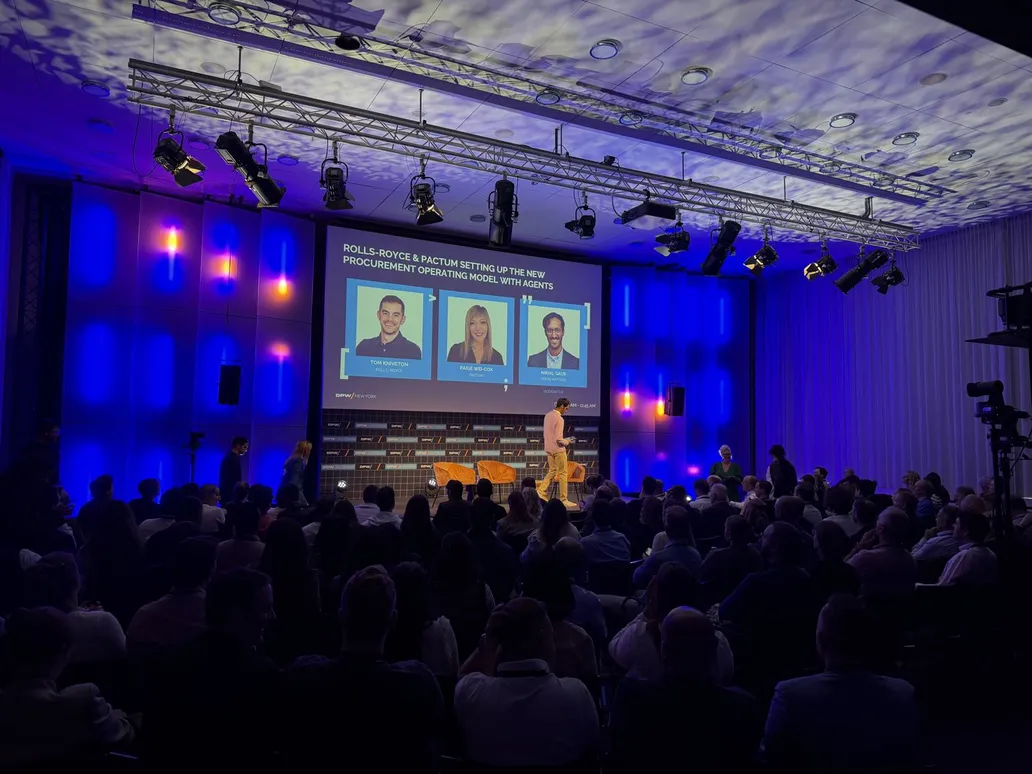
Rolls-Royce and Pactum: setting up the new procurement operating model with agents.
- Tom KnivetonHead of Procurement Systems & Data, Rolls-Royce
- Paige Wei-CoxChief Product Officer, Pactum
- Nikhil GaurThe Hackett Group, moderating
- How a 122-year-old engineering business and an AI company founded in 2019 actually work together on new ideas.
- Why indirect is the proving ground for autonomy, and what gets proved there before it moves into direct.
- Where the line sits between AI assisting a buyer and an agent being trusted to act.
- What changes for procurement people as agents take on more of the work, and how trust gets built along the way.
- Whether last year's DPW prediction, agents doing 80% of procurement work within two to three years, looks more or less realistic now.
Next year, we'll be back in Amsterdam.
DPW Amsterdam is the epicenter of procurement technology worldwide. If you care about where procurement is heading, I'm telling you, this is the place to be.
We've already booked our place for next year.
I came back from this one properly hyped, and every conversation on the stand pointed the same way: buyers want the work done for them, and they want to see who's already doing it.
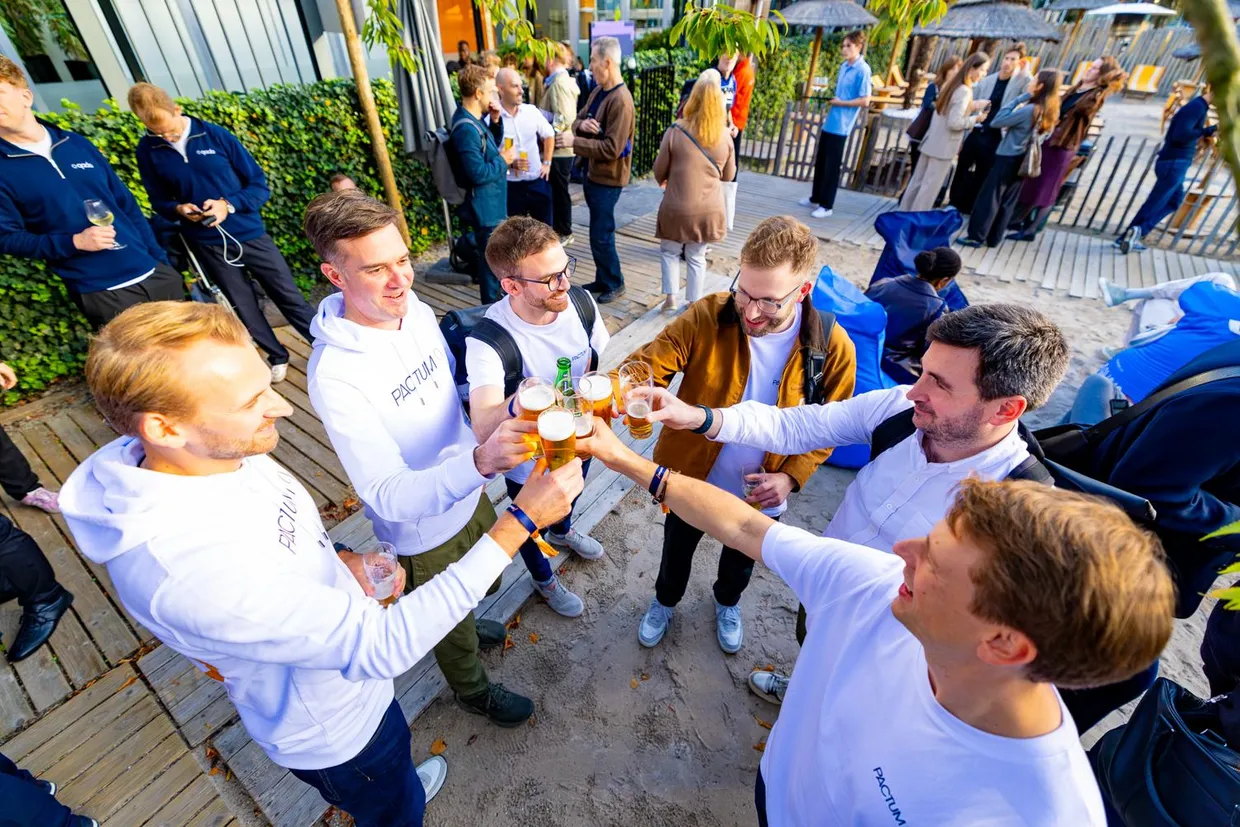
Next year, we'll be there showing how more and more of the world's greatest companies are working truly autonomously in procurement.
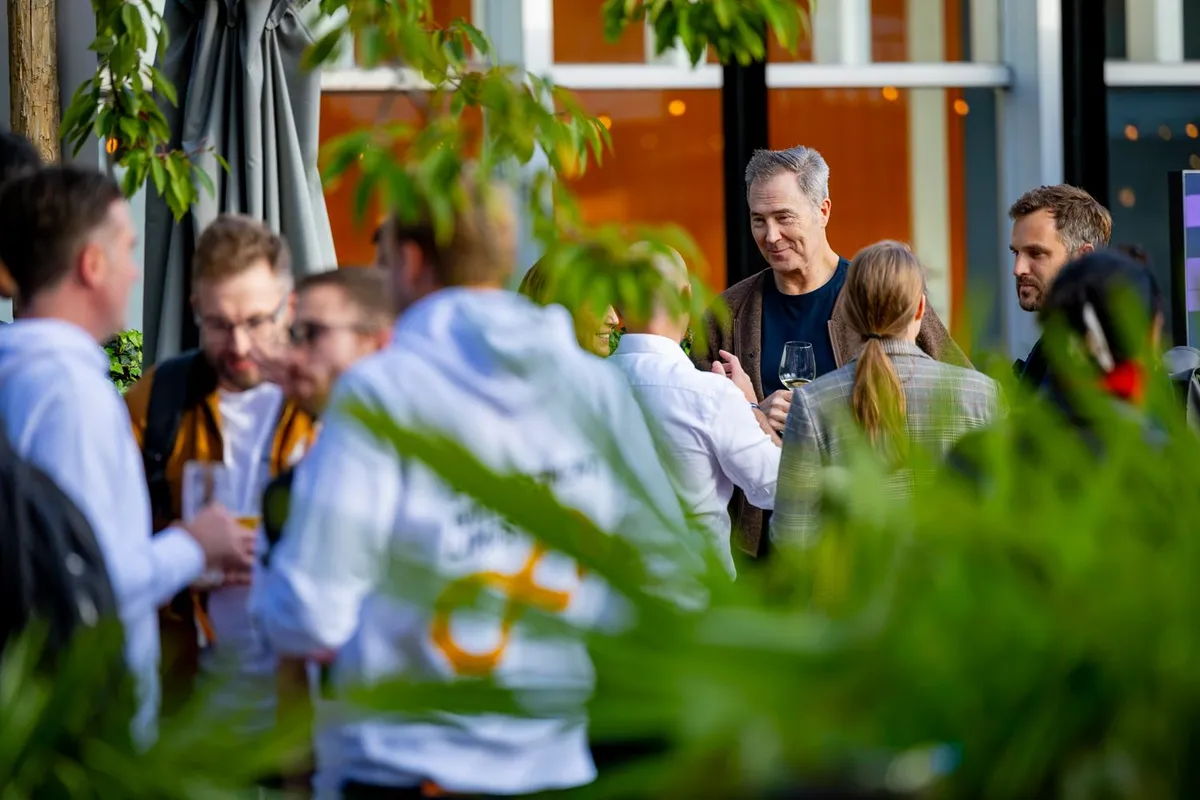
Two days in Amsterdam.
Drag or scroll across.
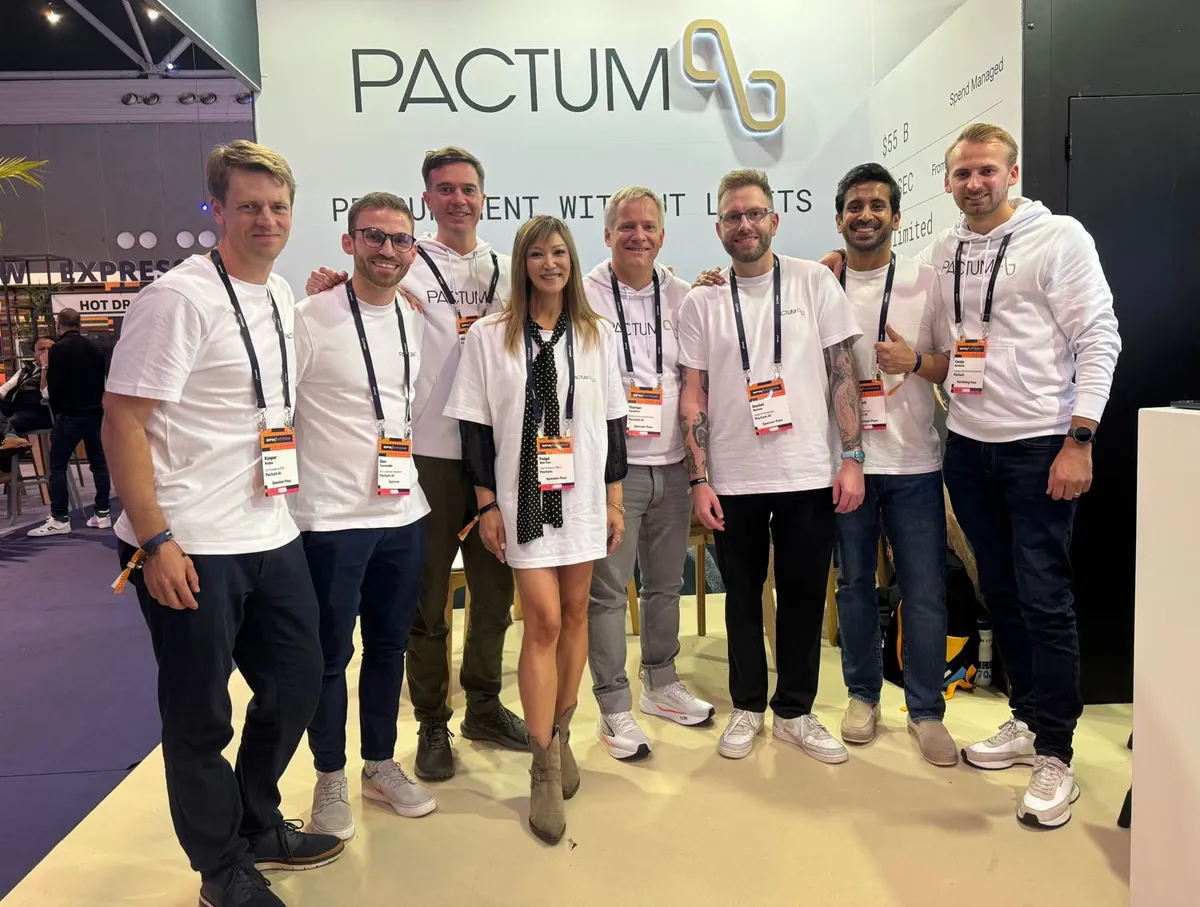
Questions people asked me about DPW Amsterdam 2026.
What was the main theme of DPW Amsterdam 2026?
The main theme of DPW Amsterdam 2026 was autonomous procurement, where the work itself gets done by AI and people step in only where they're needed. You saw AI on almost every one of the roughly 120 technology vendor stands, but the buyers I met were asking a much sharper question, aka how much of the work could happen without them, and loads had budget set aside to find out.
What is true autonomy in procurement?
True autonomy in procurement means Digital Workers carry a request end to end, checking it against policy, finding approved suppliers, negotiating and writing it back, with people involved only for exceptions or when they choose. Most of what's sold as AI today is a workflow with AI layered on top, which helps each buyer do a bit more but still leaves them as the bottleneck.
Is procurement ready for autonomous AI?
Procurement is ready for autonomous AI, and the teams I met at DPW Amsterdam were mostly asking how to roll it out safely rather than whether to. DPW leans towards tech, so I'd treat it as a strong signal rather than the whole market, but it was rare to meet anyone there who wasn't ready to start.
Do you need to replace your P2P suite to use autonomous procurement?
You don't need to replace your P2P suite to use autonomous procurement. In Pactum's case the request can start wherever your people already work, the suite stays the record and Pactum's Digital Workers do the work in between, so the roughly 80% of teams who want to build on what they have can do exactly that, and the teams planning to move off legacy tooling aren't held back either.
What is observer mode in autonomous procurement?
Observer mode is the first step towards autonomous procurement, where a Digital Worker watches your team's real work and checks whether it would have made the same call before it acts on anything. It learns from the difference, you see exactly how it would have behaved, and you hand it more autonomy as it earns it, one step up the staircase at a time.
What is the difference between procurement orchestration and autonomous procurement?
Procurement orchestration routes a request to the people who need to act on it, and autonomous procurement has Digital Workers do the checks, sourcing and negotiation themselves. Orchestration made a lot of sense when every step needed a person. Once most of those steps are done up front, you only need to route the genuine exceptions.