By Marshall Mathias, Account Executive · · Updated · 7 min read
TL;DR
If you only have 30 seconds, here’s a recap:
-
Deloitte’s 2025 Global CPO Survey names six areas where CPOs expect the most value. They are digital transformation (41%), renegotiating with existing suppliers (41%), supplier collaboration (38%), spend consolidation (34%), demand management (33%) and supply chain resiliency (29%).
-
Real digital transformation means AI that acts, not only AI that advises. Pactum’s negotiation agents prepare, negotiate and close deals within procurement’s guardrails. They then write the results back into ERP and P2P systems.
-
AI agents can start renegotiations when conditions change. They track signals such as commodity prices, inflation and demand shifts. Then they build negotiation arguments and launch negotiations on their own.
-
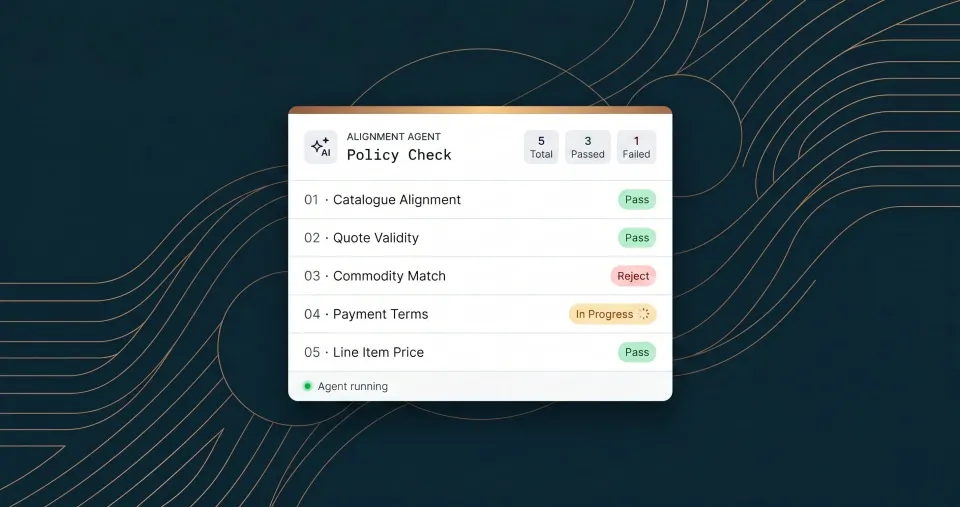
Agents can review every purchase requisition automatically. For one Pactum client, the SLA for requisition review was three days. With agents, the review cycle moves from days to minutes.
-
Pactum’s vision is procurement run by end to end agents. These agents spot opportunities, negotiate from start to finish, write results into core systems and keep looking for new value. This gives CPOs the capacity to lead change.
Every year, I look forward to Deloitte’s Global CPO Survey. It’s become one of those rare reports that everyone in the procurement fraternity pauses to read – a robust snapshot of where we are, and where we’re heading.
The 2025 edition was no different. And as I read through the findings, I couldn’t help but see the link to what we’re building at Pactum. The survey highlights six strategic areas that CPOs believe will deliver the most value this year. As I went through them, it felt like Deloitte was describing the very problems our vision of autonomous negotiation agents was designed to solve.
Let me walk you through the six focus areas, the % of CPOs that had them as a priority, and the connection I see.
1. Digital transformation (41%)
Deloitte puts digital transformation at the very top, both as a driver of change and as the enabler for every other strategy.
But here’s the reality: many companies are still dabbling. Generative AI is being used to draft contracts, summarize reports, or create insights. That’s useful, but it isn’t transformational. It doesn’t change the work itself.
The real leap is when AI doesn’t just advise, it acts. That’s why Pactum is built on agentic AI – negotiation agents that prepare, negotiate, and close deals within procurement’s guardrails, and then feed results straight back into ERP and P2P. Digital transformation isn’t about more dashboards, it’s about outcomes at scale.
2. Renegotiating with existing suppliers (41%)
CPOs also highlighted the importance of renegotiation – to deal with demand volatility, inflation, and shifting market dynamics.
But renegotiation isn’t just about executing deals. It’s about constantly tracking what’s changing – externally (commodity prices, inflation, indices) and internally (demand shifts, business priorities) – and then triggering action. Agents can detect those triggers, build negotiation arguments, and launch negotiations autonomously.
This is critical in today’s volatile markets. In manufacturing, for example, with thousands of SKUs, how could any team track, prepare, and renegotiate at that scale without eating up all of their capacity? You couldn’t. Which is why autonomous renegotiation is not just nice to have – it’s essential!
3. Increasing supplier collaboration (38%)
Another big focus area: supplier collaboration. The survey makes clear that leaders want deeper, win-win engagement with their suppliers.
Traditionally, procurement has focused this kind of collaboration on strategic suppliers – because reaching further down the tail is simply impossible with limited resources. But what if every supplier, not just the top tier, could be engaged in structured, fair, and collaborative negotiations?
Agents make that possible. They can reach out across the entire supplier base, frame deals in a win-win way, and execute without requiring additional human bandwidth. Collaboration doesn’t need to be limited to the few – it can extend to the many.
4. Consolidating spend (34%)
Spend consolidation is a proven lever: capture savings, reduce complexity, drive efficiency. Especially in areas like SaaS or indirects.
Here’s a thought experiment: what if an agent could access every requisition by default? What if it could automatically spot opportunities to consolidate suppliers, standardize terms, or pull fragmented spend under preferred agreements – and then launch a campaign to make it happen?
That’s not a distant future. That’s where autonomous negotiation is heading. Consolidation becomes proactive and always-on, rather than reactive and episodic.
5. Enhancing demand management (33%)
Deloitte also highlights demand management – aligning supply with shifting demand patterns.
Today, a lot of this work is still manual. Take requisition review. For one client, the SLA to review a requisition was three days. With agents reviewing every requisition automatically, that cycle is dropping from days to minutes. In fact, we’re working with them to bring it down to even seconds, instead of minutes.
That’s what demand management looks like when every request is checked, validated, and enhanced by default – without draining human resources.
6. Developing supply chain resiliency (29%)
Finally, supply chain resilience. The report is clear: in a volatile global environment, resilience matters more than ever.
Autonomous negotiation strengthens resilience in two ways. First, by freeing up procurement’s capacity – so teams can focus on supplier risk, innovation, and scenario planning, instead of chasing paperwork. And second, by continuously monitoring spend and supplier data to surface risks and opportunities before they become problems.
Resilience isn’t just about reacting. It’s about being prepared.
A Paradigm Shift
Deloitte is clear: CPOs are being asked to step up as agents of change. But to do that, they need capacity – and capacity only comes when the everyday burden is lifted.
That’s the vision we’re driving at Pactum: procurement run by end-to-end agents.
Agents that:
-
Spot opportunities across spend and contracts
-
Negotiate from start to finish
-
Write results directly back into core systems
-
Continuously monitor for new value
This isn’t about adding another dashboard. It’s about fundamentally changing how procurement works, day to day.
Deloitte sets out the priorities. Pactum is building the future.