Start Where Nobody Negotiates
How do you bring AI agents into procurement without taking anyone’s work away?
- Speakers
- Lizza Parbst & Daniel Barnes
- Event
- DPW Amsterdam 2026
- Runtime
- 11 minutes
Lizza Parbst started at Otto Group as a junior procurement controller. Today she is the product manager for autonomous negotiations. In the DPW Amsterdam podcast studio, she told Daniel Barnes of Pactum how she got there.
For two and a half years, her focus has been anything to do with autonomous negotiations, and anywhere AI or other automation can make procurement and negotiation more efficient. She has grown into the product manager role, which she called the step before product owner. Daniel noted that product owners are common in software companies, and rare in procurement.
Next to procurement, not inside it
Her team changes how people work. So it sits outside the teams it changes.
Like most, Otto’s procurement department has a head of procurement and is split into teams. Lizza’s team is not one of them. It looks after procurement controlling, which measures how procurement is doing, and condition management, which keeps track of the prices, discounts and payment terms agreed with each supplier. It also looks for new ways to improve how procurement works. On the org chart it sits next to the head of procurement, not under her.
That is on purpose. “What I do inherently is I go look at people’s jobs and try to change the way they do their job,” Lizza said. That is easier to do from outside the team whose work you change.
Procurement has done the same things for many years, Daniel said. Teams automate parts of the work, but the tasks stay the same, and people care a lot about the work they do. Telling your own boss there is a better way is hard.
Lizza agreed. “You don’t want the people that you work with at the end of the day or whose jobs you touch, you don’t want them to feel like you’re backstabbing them,” she said.
“You want it to be a change that you can lead together.”
Lizza Parbst, Otto Group
A pilot needs an owner
The pilot worked. Then the question was how to make it part of the process.
Otto started working with Pactum two and a half years ago. The pilot was short, a couple of months, to set things up and see if Pactum was a fit at all. It was. The next question was how to scale autonomous negotiation and build it into Otto’s processes, so it would not stay a standalone solution with manual steps and workarounds.
Otto soon saw that it needed one person whose main job and main focus was this topic, Lizza said. She grew into that role, and it happened naturally. Daniel called it a kind of obsession: to do great things in knowledge work, you need people who think about one part of it and little else.
Her work covers the product, and the processes before and after it. How do they connect? Which people does she need to talk to, and which of them matter most? That is how she moves things and gets people through the change.
“You have to know your people and the people you’re affecting.”
Lizza Parbst, Otto Group
Start where nobody negotiates
Many procurement pilots fail on people, not technology. Otto started where the pilot would touch no one’s work.
Daniel sees many pilots in procurement fail, and often not because the technology does not work. People do not take up the new way of working. Otto avoided that from the start. The pilot only covered suppliers Otto otherwise did not negotiate with, its tail spend, the long list of smaller suppliers. The agent was tested where it would not touch anybody’s work.
Lizza truly believes that is why it worked in the end: nobody lost anything. What the pilot gave them instead was success.
“We had success. And we could show that and build trust.”
Lizza Parbst, Otto Group
Then they raised the threshold, so the agent could negotiate with more suppliers.
Today Otto uses several Pactum capabilities, built into its purchase-to-pay (P2P) process. And people come to Lizza’s team with work of their own: their plate is full, they have something coming up, can it go through Pactum instead?
- 01
Pilota couple of months, to see if Pactum was a fit
- 02
Only unnegotiated suppliersnobody’s work was touched
- 03
Show the successresults build trust
- 04
Raise the thresholdmore suppliers in scope
- 05
Into the purchase-to-pay process
- 06
Colleagues ask for more“Can you just take that from me?”
For Daniel, undermanaged or unmanaged spend is an easy way in, for a person like Lizza or a small center of excellence. Test on a set of suppliers and spend, show the results, then keep raising the thresholds and bring more of people’s real work in, until people ask you to take more.
“Can you just take that from me?”
Lizza’s colleagues, as she tells it
Buyers become relationship managers
Agents will be everywhere. Strategic buyers stay, but their work changes.
Lizza thinks strategic buyers will still be there, and still matter. The question for her is what work they will do. Agents are appearing for every task, she said, and they will keep getting better.
“There will be agents everywhere.”
Lizza Parbst, Otto Group
She expects the buyer’s role to move toward relationship management, above all with the A suppliers, the largest and most important ones, rather than the long tail of smaller ones. Whatever the category, software, AI and data will be part of it. Companies will share information with their suppliers, and they will want to work with someone they trust, even when AI supports everything.
- AgentsEvery task they can takeAgents keep appearing for every task, and they keep getting better.
- Strategic buyersThe supplier relationshipAbove all with the largest and most important suppliers, where data is shared and trust matters most.
Daniel hopes buyers will do this with far more suppliers, once the work that takes up their time is handled for them. He sees the same in sales: AI now surrounds the sales process, but relationship building never leaves the role. Procurement is often seen as the opposite of sales, he said, yet both rely on relationships.
“The relationship that you are building with the supplier will be a huge focus.”
Lizza Parbst, Otto Group
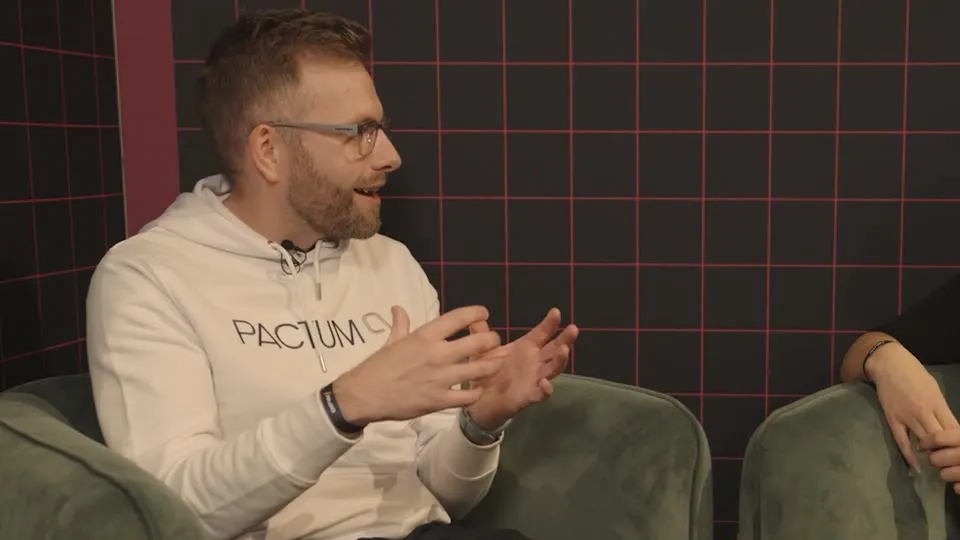 Full conversation · 11 minutesWatch Lizza and Daniel in the DPW Amsterdam studioWatch on YouTube ↗
Start with the spend nobody negotiates.
Pactum digital workers negotiate with the suppliers your team never gets to, inside your guardrails, then take on more as trust grows.